updated
ноябрь 17, 2026
...
read
Do Wisdom Teeth Have to Be Removed? How They Grow and When to Act

A wisdom tooth that has come through straight, stays healthy and is easy to clean can usually stay and be checked at routine visits. Removal makes sense when there is no room for it: it is stuck in the bone, pushes on the next tooth, has decay or keeps inflaming the gum.
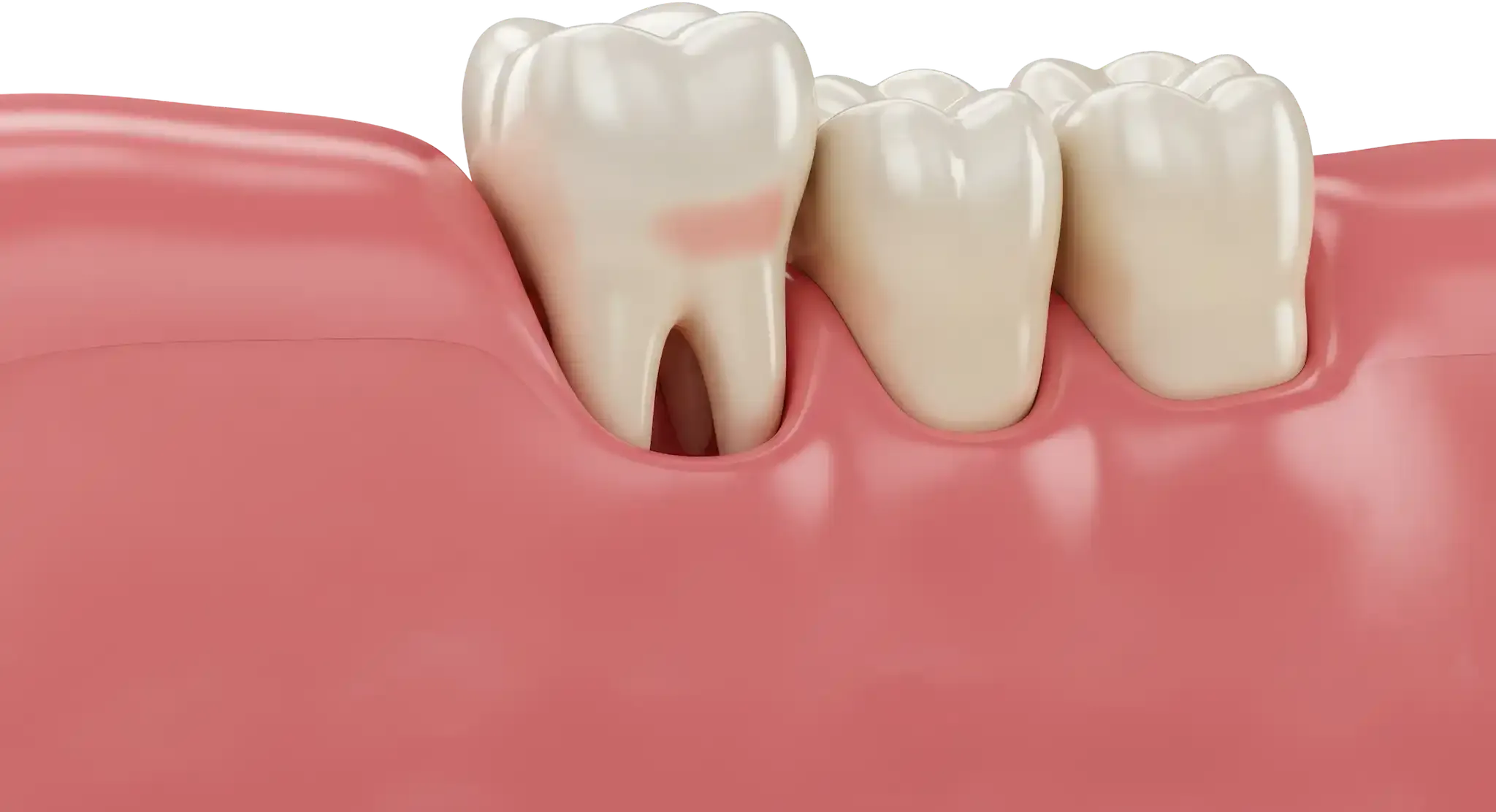
Wisdom teeth cause more worry than any other teeth. Some people have them out at the first twinge. Others put up with a sore gum at the back of the jaw for years because they dread the procedure. The truth sits in the middle. Plenty of wisdom teeth sit quietly in the mouth for life. Others grow in a way that causes trouble from day one.
The decision does not depend on your age or on whether the tooth hurts right now. What matters is whether it has room, how it sits and how easy it is to keep clean. A surgeon judges that from an examination and an X-ray, not from one symptom. That is why the same situation in two people can lead to different advice, and both can be right.
What is a wisdom tooth?
It is your third molar, a large back tooth for chewing. Counting from the middle of the front teeth, it is the eighth tooth along, so dentists often call it an eight. It grows at the very end of the row, behind the second molar, at the top and bottom, on the left and right.
Wisdom teeth also tend to have no partner. If the lower one comes through and the upper one does not, the lower tooth has nothing to bite against. It does very little chewing, yet it collects plaque in the hardest place to reach in your mouth.
Why do we have wisdom teeth?
They are simply the last set of molars. The name comes from timing. All the other adult teeth are long in place by the time wisdom teeth arrive, when you are already a grown-up. By then the jaw is often too small for one more large tooth, and that is where most of the problems start.
| Question | Short answer |
|---|---|
| Where are wisdom teeth located? | At the very back of each jaw, behind the second molars, top and bottom, left and right |
| How many wisdom teeth do you get? | Usually up to four, one in each corner of the mouth. Some never come through, so you may see fewer |
| Does everyone have wisdom teeth? | Not everyone can see them. Some stay hidden in the jawbone and only show up on an X-ray |
| When do your wisdom teeth come in? | Most often between 17 and 21, sometimes later |
| How long do wisdom teeth take to grow? | The roots are not fully formed before about 20, which is why removal tends to be easier when you are younger |
| How long does it take for wisdom teeth to come in? | There is no fixed timetable. Some come through quickly, some stay half-covered by gum for years and some never appear |
What age do you get wisdom teeth?
According to the US medical encyclopedia MedlinePlus, wisdom teeth are the last teeth to erupt and usually come in between the ages of 17 and 21. Ask the NHS what age do wisdom teeth come through and the answer is wider: in your teens or early 20s. Everyone is different. Some people get all four at about the same time. Others get them years apart, and some wisdom teeth never break through the gum at all.
Still, "does everyone get wisdom teeth" is a fair question, and an X-ray answers it better than a calendar. The image shows whether a tooth is there, what angle it sits at and whether it has room. That helps most when the gum at the back of your jaw aches from time to time but you cannot see a tooth.
What does wisdom tooth pain feel like?
Often a wisdom tooth comes through without much fuss. When it does hurt, people usually describe a dull ache or pressure right at the back of the jaw, a swollen and tender gum behind the last tooth and discomfort when chewing on that side. MedlinePlus also lists bad breath, an unpleasant taste when biting, sometimes trouble opening the mouth and swollen glands in the neck as signs of a partly erupted tooth.
One curious detail from the same source: the gum over an erupting tooth can swell and then tighten again, so it feels as if the tooth came up and then went back down. If you get constant pain, swelling and trouble swallowing in that area, the gum over the tooth is probably inflamed. We cover that in our article on pericoronitis. If you need to calm sharp pain before your appointment, read our guide to toothache.
Why do wisdom teeth hurt?
Most of the time the reason is lack of space. A tooth that cannot come through fully and stays in the bone or under the gum is called impacted. Impacted wisdom teeth are very common. MedlinePlus explains why in simple terms: the jaw may be too small, the teeth are crowded, and a new tooth twists, tilts or shifts as it tries to come through.
The position varies a lot. A wisdom tooth can lean forward and press into the crown of the second molar, lie almost flat in the bone or break through at one edge and stay half under the gum. Sometimes it grows towards the cheek. The crown points outwards and you keep biting the inside of your cheek when you chew. The sore spot looks like an ordinary scratch, but it keeps coming back for as long as the tooth stays.
A partly erupted tooth is riskier than one fully buried in bone. A pocket of gum forms over it, and food and plaque get trapped there. Your toothbrush barely reaches it. That is why gum inflammation and decay, both on the wisdom tooth and on the second molar next to it, show up here far more often than anywhere else in the mouth.
Book a check-up if the pain at the back of your jaw keeps returning or the gum behind your last tooth swells or bleeds. The same goes for biting your cheek more and more often or food that keeps getting stuck behind the last tooth. A swollen cheek, a high temperature or trouble opening your mouth means you should not wait for a routine visit. See a dentist the same day.
Do you have to get your wisdom teeth removed?
No. The NHS says that if a wisdom tooth is not causing problems, it is usually left where it is and checked at routine dental visits. Removal is advised when the tooth has no room to come through fully, for example when it is blocked by another tooth or partly covered by gum. According to the NHS, this can lead to pain and swelling, gum infection, food getting stuck, tooth decay, gum disease, a cyst around the tooth and a dental abscess.
You may also hear the opposite view, that healthy wisdom teeth should never come out. There is some sense in it. Any extraction is still surgery with its own risks, and if the tooth sits straight and causes no trouble, there is no reason to take them. But that only applies to a tooth that is genuinely healthy and easy to clean. The table below can help you see where you stand.
| Situation | What a dentist usually advises |
|---|---|
| The tooth is fully through, straight, has a partner to bite against and is easy to clean | Keep it and check it at routine visits |
| The tooth is completely in the bone, not pushing on other teeth and causing no symptoms | Monitoring, with a follow-up X-ray when the dentist suggests it |
| The tooth is partly through and the gum over it gets inflamed again and again | Removal in most cases |
| Deep decay on the wisdom tooth, which is hard to reach for treatment | Removal if treatment cannot give a reliable result |
| The wisdom tooth pushes on the second molar, which now has decay or damage | Removal to save the second molar |
| The tooth grows towards the cheek and keeps injuring it | Removal |
| A cyst around the tooth on the X-ray | Removal and treatment of the cyst |
Why remove a wisdom tooth that does not hurt?
No pain does not mean no problem. MedlinePlus notes that food trapped around a partly erupted tooth can lead to decay on the wisdom tooth or its neighbour, and even to bone loss. Decay on the back of the second molar, hidden behind a tilted wisdom tooth, can grow quietly and only show up on an X-ray. In cases like this, removing the wisdom tooth protects the second molar, which matters far more for chewing.
There is a practical point too. MedlinePlus says that having wisdom teeth removed before 20 often gives better results: the roots are not fully formed yet, so the tooth comes out more easily and the area heals better. With age the roots grow longer and curve, the bone gets harder and complications become more likely. That is no reason to take out every wisdom tooth. It is a reason not to put off removal once you know you need it.
How a wisdom tooth is removed
It all starts with an image. Your dentist checks how the tooth sits, how many roots it has and how close they are to the nerve in the lower jaw. A panoramic dental X-ray is usually enough. For complex cases you may need a 3D scan. Then the surgeon explains how the removal will go, how long it takes and what to expect afterwards.
Many people picture a tooth being pulled out by force, but modern extraction looks different. The NHS describes the main steps. First the area is numbed. If gum covers the tooth, the surgeon cuts it and then widens the socket. The tooth comes out in one piece or is cut into 2 or 3 pieces first. Dissolvable stitches are used if needed. The removal itself often takes just a few minutes and, according to the NHS, should take no more than 40 minutes.
A simple extraction means a tooth that is fully through and sits straight. Position is what makes it complex: the tooth is in the bone, tilted or has curved or joined roots. In that case the surgeon tells you in advance, based on the X-ray, how much work is involved. At Cristi Dent the procedure, including preparation, takes 30 to 60 minutes.
After the anaesthetic wears off, some discomfort is normal. The NHS says that for up to 2 weeks you may have pain and swelling, which usually start to improve after 1 or 2 days. You might also get bruising on your cheek, a stiff jaw and discomfort when chewing or swallowing. The harder the extraction, the longer recovery usually takes.
Risks and recovery
Most extractions go without complications, but your surgeon should explain the risks before the procedure. The best known one is dry socket. The blood clot in the socket does not form properly or comes away too early, and a few days later the pain gets worse. Other risks are a wound infection and damage to the nerve that runs near the roots of a lower wisdom tooth. That can cause numbness or tingling in the tongue, lip or chin. It usually gets better, but it can last weeks or months.
To help the area heal, eat soft food for the first few days, do not smoke, avoid alcohol and very hot drinks, and brush your other teeth carefully without touching the socket. If the bleeding does not stop, the pain and swelling get worse instead of better, or you notice a bad taste or a temperature, call your dentist without waiting for the follow-up visit.
At Cristi Dent, wisdom teeth are removed by surgeons Roman Casian and Vladislav Casian. Roman Casian is an implant surgeon and periodontist. He trained at University College London (Eastman Dental Institute), holds an MSc in periodontology and, among other things, handles complex wisdom tooth removals. Every extraction starts with an X-ray and a consultation with the surgeon, and the anaesthetic is chosen for your sensitivity. You can read more about the procedure and our surgeons on the wisdom tooth extraction page.
Frequently asked questions
Can wisdom teeth cause headaches?
They can. MedlinePlus lists a long-lasting headache or jaw ache among the symptoms of a partly impacted tooth. A headache has many other causes, though, so it is worth checking the tooth with an X-ray before you blame it.
Can wisdom teeth cause jaw pain?
Yes. Pain or tenderness in the gum or jaw bone is one of the typical signs of a partly erupted wisdom tooth, according to MedlinePlus. If the pain keeps coming back or your cheek swells, see a dentist rather than waiting for it to settle.
When do wisdom teeth stop growing?
There is no exact age. MedlinePlus notes that the roots are not fully developed before about 20 and keep getting longer and more curved with age. Problems can start at any age, the NHS says, so a tooth that was quiet for years can still flare up later.
How many wisdom teeth do you have if you can't see any?
You may still have some. Wisdom teeth can stay fully buried in the jawbone without any symptoms. A panoramic X-ray shows exactly how many are there and how they sit.
Is wisdom tooth removal painful?
Not during the procedure. You will usually have a local anaesthetic, so you should not feel any pain. Sedation or a general anaesthetic is an option for difficult removals or very anxious patients. Most people can get back to normal activities the next day, the NHS says, or after 1 to 3 days if the removal was more complex.
If the gum behind your last tooth aches or swells, a wisdom tooth is growing at an angle or you simply want to know whether it should come out, come in for a consultation. The surgeon will look at your X-ray, explain what is happening and tell you if you need surgery or just monitoring. The consultation, diagnosis and treatment plan are free for new patients. Call us on +373 69 620 555 or leave your number in the form on our website. Our administrator will call you back during working hours. The clinic is at 28/6 Andrei Doga St., Chișinău, open Monday to Friday 09:00-18:00 and Saturday 09:00-13:00.
This article is for general information and does not replace a consultation with a doctor.
ARTICLE AUTHOR
Implant surgeon and periodontist who performs tooth extractions, including complex wisdom tooth removal, and dental implant treatment.