updated
ноябрь 20, 2026
...
read
How Is a Crown Fitted to a Tooth? Every Step From Check-up to Final Fit

A crown usually takes two visits. At the first, the dentist prepares the tooth, takes a scan and fits a temporary crown. At the second, the permanent crown is checked and cemented. A lab makes it in between, and any sensitivity afterwards usually settles within a couple of weeks.
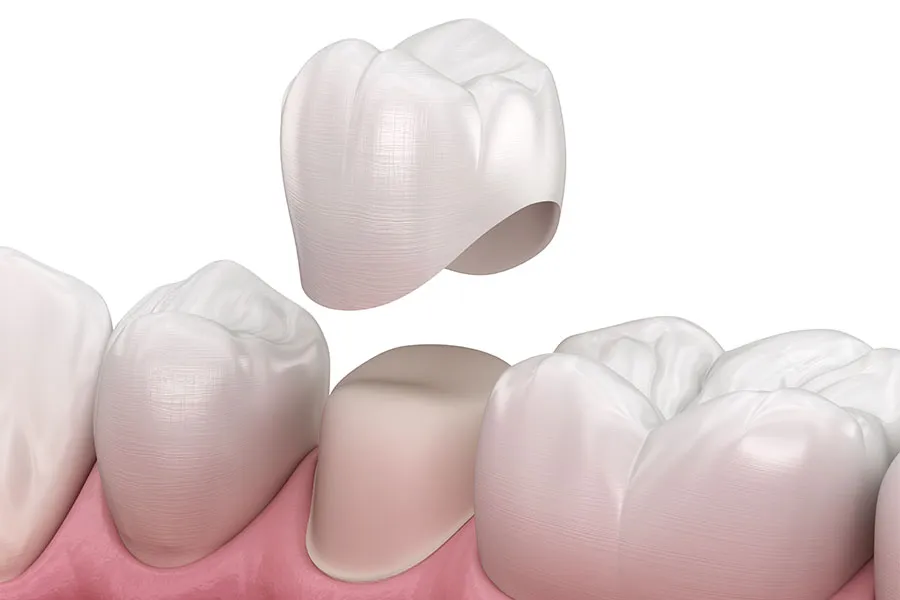
Your dentist says a tooth needs a crown, and the questions start straight away. How long will it take? Will they file down healthy tooth? Will you walk around with an ugly stump? Will it hurt? The good news: crown treatment is a routine, well-planned procedure with very few surprises.
Most crowns need just two visits, and the work is done under local anaesthetic. It only takes longer if the tooth needs treatment first, or if the tooth is missing and an implant has to go in before the crown.
What is a dental crown?
A crown is a custom-made cap that covers the whole visible part of a tooth above the gum and copies its natural shape. It restores strength, chewing and appearance. Crowns are made from porcelain fused to metal, zirconia or pressed ceramic, and temporary ones from resin. If you are comparing materials for front and back teeth, read our guide to zirconia vs metal ceramic crowns.
What is a crown on a tooth actually for? According to MedlinePlus, the US medical encyclopedia, you may need one when a large cavity leaves too little natural tooth to hold a filling. Chips, cracks and teeth worn down by clenching or grinding are other common reasons. Teeth that have had root canal treatment are a special case. They become more brittle, and a crown protects them from splitting.
Why a crown protects the tooth
How does a tooth crown work? Think of it as a helmet. The crown takes the biting load and spreads it across the whole tooth. The weakened walls underneath no longer crack under pressure. Because it seals the tooth from above, it also keeps food and bacteria away from the prepared surface.
The steps, from first check-up to final fit
The order is almost always the same. Only the amount of preparation changes. This table shows what happens at each stage and roughly how long it takes in the chair.
| Stage | What happens | How long it takes |
|---|---|---|
| Check-up and X-ray | The dentist assesses the tooth, roots and gum, chooses the material and plans treatment | One consultation |
| Treatment and core build-up | Root canals are treated if needed, the core is rebuilt with filling material or a post | One or more visits, depending on the tooth |
| Shaping under anaesthetic | A layer of tooth is removed to make room for the crown | Usually within one visit |
| Scan and temporary crown | A digital 3D scan or impression is taken, a temporary crown goes on | Same visit |
| Lab work | A technician makes the crown from the scan | Usually a few days |
| Try-in and cementing | Shape, colour and bite are checked, the crown is cemented | Second visit |
Check-up, X-ray and preparing the tooth
It all starts with an X-ray. Only an image shows the state of the roots and the tissue around them, whether the canals were treated before and whether the tooth can take the load. If the tooth is inflamed or deep decay has reached the nerve, root canal treatment comes first. A crown over untreated infection just hides the problem. It keeps getting worse underneath.
How bad can a tooth be and still get a crown? More than most people expect. A small gap is rebuilt with filling material. A badly broken tooth is reinforced with a fibre post or a cast core first. If the tooth is cracked below the gum or the root is weak, a crown may not be a reliable option, and your dentist will talk you through alternatives.
Shaping and scanning
How much tooth structure is needed for a crown depends on the material and the tooth's position. The dentist removes a thin layer of enamel and dentine to make room for the crown and keeps as much of your own tooth as possible. Cleveland Clinic notes that if there is not enough left, the dentist may first build up parts of the tooth with filling material to give the crown a firm hold.
Next comes the impression. At Cristi Dent we take digital 3D scans: an intraoral scanner replaces the putty, and an exact model of your tooth goes straight to the lab. Before you leave, the dentist fits a temporary crown. You go home with a neat-looking tooth, not a filed-down stump.
Try-in and cementing
At the second visit the temporary crown comes off and the permanent one is tried in. The dentist checks how it meets the gum, whether the colour matches your neighbouring teeth and whether it feels right when you bite. If all is well, the crown is cemented and your bite is checked again. Even a fraction of a millimetre too high is noticeable when you chew. Nobody rushes this step.
The standard two-visit approach
How is a crown put on a tooth in practice? MedlinePlus describes the standard approach the same way. At the first visit the tooth is numbed, old fillings and decay are removed, the tooth is shaped, an impression is taken and a temporary crown goes on. At the second visit the temporary comes off and the permanent crown is fitted and cemented, sometimes with an X-ray to check the fit.
Timing between visits
How long does it take to fit a crown on a tooth? At Cristi Dent the lab usually needs a few days between the two visits. If the tooth needs root canal treatment or a post, add those visits to the plan. Your dentist gives you exact timings after the check-up, once the X-ray shows what the tooth needs.
Is getting a crown painful?
The work itself is done under local anaesthetic. Once the numbness wears off, the tooth and the gum around it may ache a little. That is a normal reaction to shaping and work near the gum line.
Cleveland Clinic says some sensitivity to hot and cold is normal for a couple of weeks after a crown is placed, and the gum may feel sore for a few days. Most people go back to work straight after the appointment. What is not normal: pain that keeps you awake or gets worse over time. Call your dentist rather than putting up with it.
What if the tooth is missing?
A crown needs something to sit on. When a tooth has been taken out, that support comes from an implant, an artificial titanium root placed in the jawbone. The permanent crown usually does not go on straight after the extraction. Cleveland Clinic explains that an implant takes three to nine months to fuse with the bone. Only then is the crown attached. In the meantime your dentist may offer a temporary solution.
A bridge is the other option: crowns on the neighbouring teeth hold a false tooth between them. Your dentist helps you choose at the consultation.
Toothache under crown: why it happens
A crown covers a tooth but does not make it invincible. MedlinePlus points out that decay can still develop underneath, especially at the edge near the gum where plaque builds up. When pain starts years after a crown was fitted, the usual suspects are decay under the crown margin, nerve inflammation that began after the tooth was shaped, or infection at the root.
Throbbing tooth pain after crown fitting that keeps building, or pain when you bite on a root-filled tooth, usually means inflammation has reached the tissue around the root. A poorly sealed canal or a crack can be behind it. Get it checked with an X-ray. Root canal retreatment often saves the tooth, though sometimes the crown has to come off first.
Looking after a crowned tooth
Clean a crowned tooth as carefully as the rest: brush twice a day and use floss or an interdental brush once a day, paying extra attention to the edge near the gum. Hard nuts, ice and opening bottles with your teeth will shorten the life of any crown. If you clench or grind at night, ask your dentist about a protective night guard.
With that kind of care a crown lasts a long time. Cleveland Clinic puts the average at 5 to 15 years. The exact figure depends on the material, your bite and how regularly you have check-ups.
Who fits crowns at Cristi Dent
Crown and bridge work at the clinic is led by our clinical director and prosthodontist Vladislav Casian. Over 20 years of practice he has helped more than 20,000 patients restore teeth after partial or complete tooth loss, and he has trained in tooth preparation for different types of prosthetic restorations. Decisions are based on X-rays, and your treatment plan and price are agreed before work begins. You can see crown types and prices on our dental crowns page. The consultation, diagnosis and treatment plan are free.
Frequently asked questions
Does getting a crown hurt?
Not during the procedure, because the tooth is numbed. Afterwards a mild ache or sensitivity to cold for a few days is common. Severe or growing pain is not. Tell your dentist.
How is a dental crown fitted if I only have a few days in Chișinău?
Tell us your travel dates when you book. If the tooth needs no extra treatment, both visits can often fit into a short stay, with the lab working in between. Your dentist confirms the timeline after the first check-up.
How much tooth do you need for a crown?
Enough healthy tooth or rebuilt core for the crown to grip. If too little is left, the dentist first rebuilds the tooth with filling material or a post. If the root itself is weak, an implant may be the more reliable choice.
Is having a crown fitted painful for sensitive teeth?
No. Anaesthetic is matched to your sensitivity, and the dentist can top it up during the appointment if you feel anything. Sensitive teeth may react to cold for a little longer afterwards. This usually settles.
Does having a crown fitted hurt more than a filling?
It feels much the same in the chair, because both are done under local anaesthetic. The appointment is longer, and the gum may feel a little tender for a day or two afterwards.
If a tooth is badly broken, has a large old filling or an existing crown has started to bother you, call us on +373 69 620 555 or leave your number in the form on our website. Our administrator will call you back during working hours. The clinic is at 28/6 Andrei Doga St., Chișinău, open Monday to Friday 09:00-18:00 and Saturday 09:00-13:00.
This article is for general information and does not replace a consultation with a doctor.
ARTICLE AUTHOR
Chief doctor and prosthodontist since 2005 who specialises in dental crowns, prosthetics and full restoration of the dental arches.