Dental Crowns in Chișinău
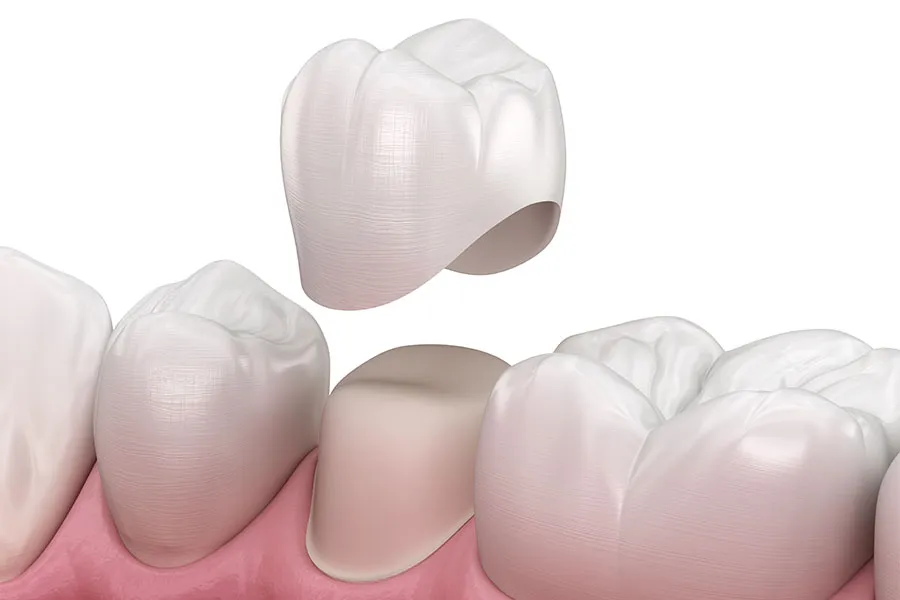
A crown covers the whole tooth when a filling no longer holds: after a large cavity, root canal treatment or a chipped tooth.
Cristi Dent places four types of crowns. The prosthodontist chooses the material for the specific tooth, your bite and the chewing load.
Dental crowns: types and prices
Which crown to choose for chewing and front teeth
The main difference is the metal. With metal ceramics a dark line can show at the gum edge over time. Zirconia and E.max contain no metal and look like a natural tooth.
Chewing teeth take most of the load. Asked which crowns are best for back teeth, a prosthodontist will most often say metal ceramic or zirconia. Metal ceramic costs less, zirconia is stronger. E.max is usually not placed on a chewing tooth under heavy load.
Crowns for front teeth are chosen by eye: shade, translucency and how well they match the neighbouring teeth. Here E.max or zirconia is placed more often. The doctor decides after an examination and an X-ray.
Crown comparison: metal ceramic, zirconia, E.max
| Criterion | Metal ceramic crown | Zirconia crown | E.max crown |
|---|---|---|---|
| Strength | High | Very high | High |
| Appearance | Neat | Very natural | Very natural |
| Suitable for chewing teeth | Yes | Yes | Limited |
| Suitable for the smile zone | Limited | Yes | Yes |
| Contains metal | Yes | No | No |
| Risk of a dark line at the gum | Possible | No | No |
| Service life | Many years | Many years | Many years |
| Cost | The most affordable | Higher | Higher |
Why patients choose crowns at Cristi Dent
Dental crown price in Chișinău
Zirconia crown on a tooth 3,000 MDL, custom 4,000 MDL, with porcelain veneering 6,000 MDL.
Temporary crown on a tooth 800 MDL, on an implant 3,000 MDL.
On an AlphaBio, Megagen Anyone or Blue Diamond implant: metal ceramic crown 4,000 MDL, zirconia 6,000 MDL.
Dental crown: how it is fitted
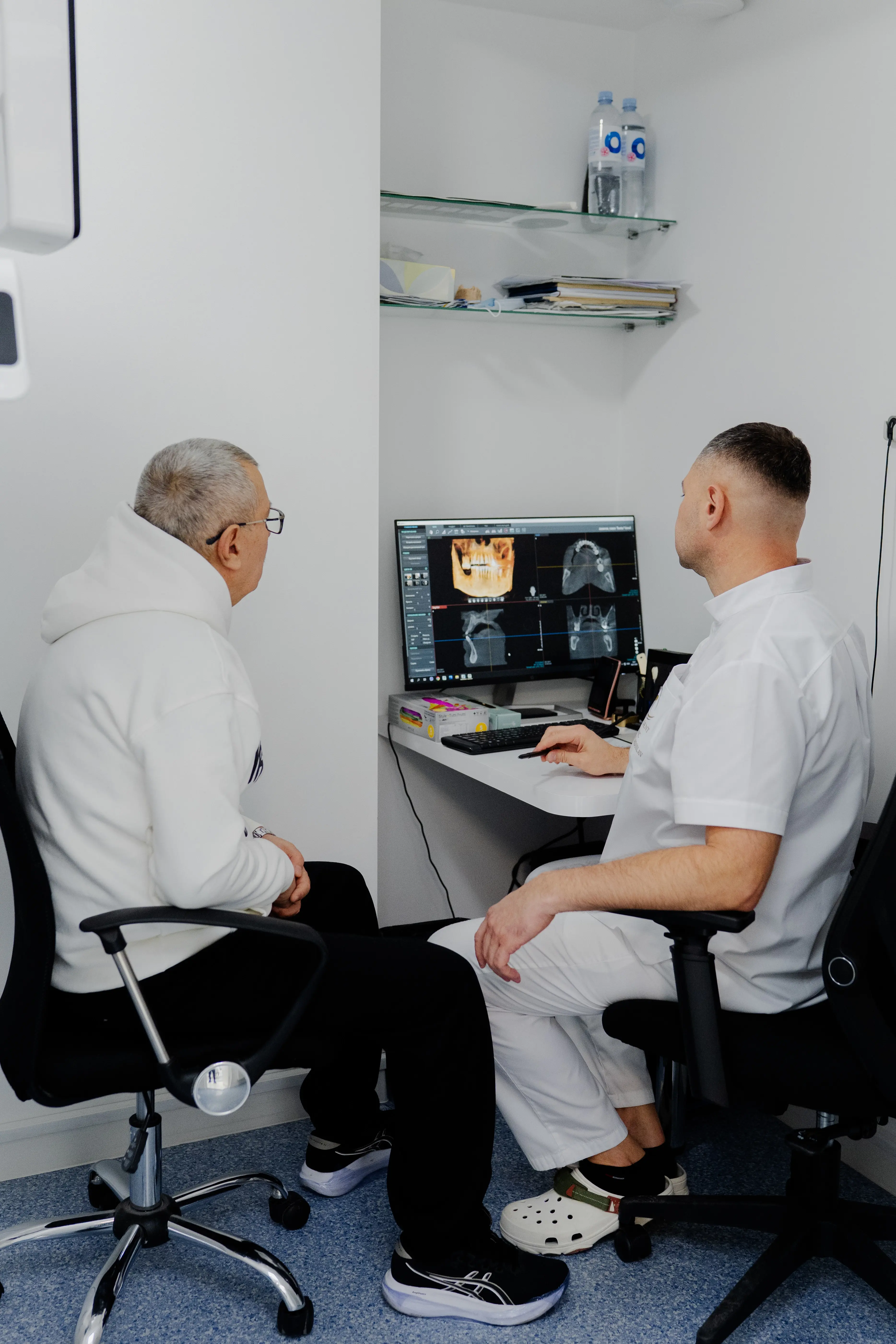
The doctor examines the tooth and takes an X-ray to choose the crown material and plan the treatment.
The tooth is shaped under anaesthesia, with minimal intervention in healthy tissue.
The doctor takes digital 3D impressions for the laboratory. A temporary crown is placed while the permanent one is made.
The finished crown is fixed on the tooth. The doctor checks your bite, comfort and the look of the crown.
How long it takes to fit a crown
It usually takes two visits.
Between them the laboratory makes the crown, as a rule within a few days.
The doctor gives the exact timing after the examination.
What happens if a damaged tooth is not restored
Dental crown FAQ
Don't put off your dental health