Temporary Dental Crowns in Chișinău
Temporary dental crowns protect a prepared tooth or an implant while the permanent restoration is being made, and they keep your smile looking natural. Without them, the tooth stays sensitive and vulnerable, neighbouring teeth can drift and the gum can lose its shape. Our orthopaedic dentist, who leads all of your prosthetic treatment, places temporary crowns himself.
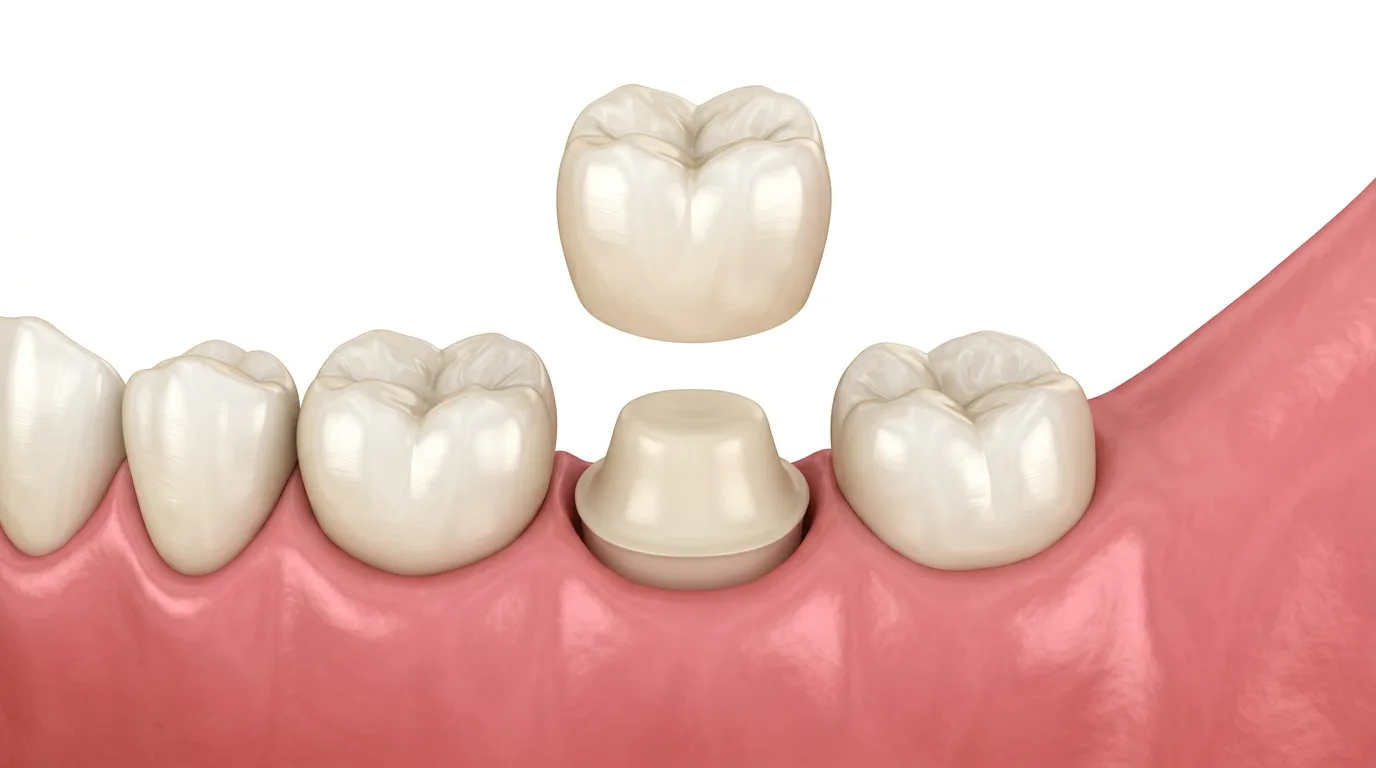
What are temporary dental crowns
A permanent crown is made in a dental laboratory from an individual impression or a digital scan. It can be porcelain-fused-to-metal (PFM) or zirconia. That takes time. Throughout this period the prepared tooth has no protection: the enamel has been reduced, so it reacts to hot and cold, is easily damaged and collects plaque. Temporary dental crowns cover the tooth, restore its shape and let you eat and smile normally.
Temporary dental crowns are made of acrylic or composite materials. They are lighter and softer than permanent ones, but when they are made properly they fit closely against the tooth and the gum. In our experience, the quality of a temporary crown affects the health of the gum and the accuracy of the future permanent crown, so we make temporary crowns as carefully as the permanent ones.
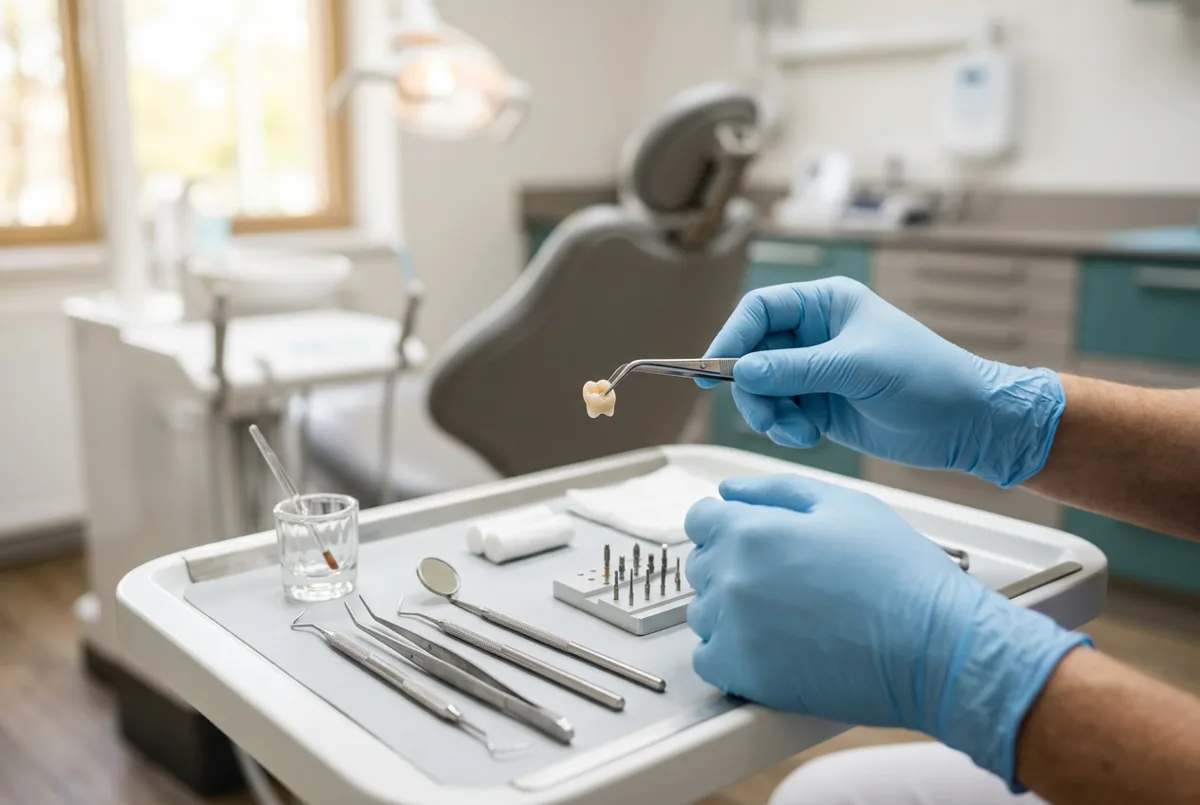
When you need temporary dental crowns
We place a temporary crown on a tooth after it has been prepared for a permanent crown, while the crown is being made in the laboratory. We also use temporary dental crowns to test a new tooth shape and bite height before the final restoration, when a tooth is under treatment for a long time (for example after complex root canal treatment), and when it is important to hold the space in the row and stop neighbouring teeth from moving. On chewing teeth a temporary restoration matters even more: it keeps the bite stable and protects the tooth from splitting under load.
A temporary crown on an implant helps shape a natural gum contour around the implant. It is placed once the implant has integrated, and sometimes right after surgery if the implant is stable enough. The gum gradually takes the right shape, and the permanent crown then looks natural. A temporary fixed prosthesis is used when many teeth or a whole jaw are being restored, including full-arch implant treatment.
Types of temporary dental crowns
Restoration | When it is used | Price at Cristi Dent |
|---|---|---|
Temporary crown on a tooth | while the permanent crown is being made | 800 MDL |
Temporary crown on an implant | gum shaping and aesthetics before the permanent crown | 3,000 MDL |
Temporary fixed prosthesis | restoring many teeth or the whole jaw | 16,000 MDL |
A temporary crown on a tooth is the most common option. We make it to the shape of the future permanent crown and fix it with temporary cement, so it is easy to remove later. A temporary crown on an implant attaches to the implant itself and works as a gum former: the doctor can adjust its shape step by step. A temporary fixed prosthesis is a non-removable restoration on several teeth or implants, which the patient wears until the permanent prosthesis is fitted.
When you do not need a temporary crown
If the permanent restoration is fitted on the same day, or the tooth is not reduced, temporary crowns are not required. When a single tooth is treated with a filling, a veneer is placed without significant preparation, or a crown is made quickly, the doctor can manage without a temporary one. The orthopaedic dentist decides at the planning stage whether you need one.
What temporary dental crowns give you
A prepared tooth is covered and does not react to hot and cold.
During treatment you do not walk around with ground-down or missing teeth.
A temporary crown on an implant shapes the gum for the permanent one.
Before the permanent crowns are made, you can judge the new shape and height of your teeth.
Temporary dental crown prices
Protects the prepared tooth while the permanent crown is being made.
A crown on an implant that shapes the gum and keeps the smile aesthetic.
A non-removable temporary restoration on several teeth or implants.
Permanent restorations are charged separately: a PFM crown on a tooth costs 2,000 MDL, a zirconia crown 3,000 MDL, a PFM crown on an implant 4,000 MDL and a zirconia crown on an implant 6,000 MDL. Please ask us at the consultation whether a temporary restoration is included in the price of full-arch implant treatment. Before treatment starts, the doctor records the full prosthetic plan with the final total.
How a temporary crown is fitted
The orthopaedic dentist assesses the tooth or implant, chooses the permanent restoration and decides whether a temporary one is needed.
The tooth is shaped for the future crown, under anaesthesia if needed.
The temporary crown is made to the shape of the future tooth, either in the surgery or in advance from an impression.
The doctor checks how the crown sits against the gum and how the teeth meet.
The crown is fixed with temporary cement or onto the implant.
When the permanent restoration is ready, the temporary one is removed and the permanent one is fitted.
How long temporary dental crowns are worn
A temporary crown on a tooth is usually worn from a few days to a few weeks, while the laboratory makes the permanent one. A temporary crown on an implant may be worn longer so that the gum has time to take shape. A temporary prosthesis during full-mouth rehabilitation is worn until the implants have integrated and the permanent prosthesis is ready. The orthopaedic dentist gives the exact timing when the plan is drawn up. If a temporary crown comes off or breaks, do not wait for your next visit: call us so that we can put it back in place.
What happens without a temporary crown
A prepared tooth without protection reacts painfully to temperature.
Neighbouring and opposing teeth shift, and the permanent crown may no longer fit.
Without a crown the gum around the tooth becomes irritated and swollen.
On the front teeth, it is hard to smile and speak with confidence without temporary crowns.
Who leads your prosthetic treatment
Our chief doctor, the orthopaedic dentist Vladislav Casian, places both temporary and permanent restorations and has more than 20 years of practice in prosthetic dentistry. He plans prosthetic treatment from the first temporary crown to the final restoration. You can read more about this area in the section on orthopaedics. After a temporary crown, the tooth is most often restored with a zirconia crown or a PFM crown, and on implants we fit permanent crowns as part of prosthetics on implants.
If you have lost all your teeth, a temporary non-removable prosthesis helps you get through the implant healing period without removable dentures. This approach is used, for example, in All-on-4 implant treatment. How long you will need to wait for the permanent prosthesis, and which temporary restoration suits you, are decided together by the orthopaedic dentist and the surgeon on the basis of your CBCT scan (3D dental scan).
Caring for a temporary crown
Temporary crowns hold less firmly than permanent ones, so avoid putting heavy load on it. Do not chew gum, toffee, nuts or hard rusks on the crown, and eat sticky food on the other side. Brush your teeth as usual, and floss carefully around the edge of the crown: pull the floss out sideways, not upwards, so that you do not pull the crown off. If you feel pain, the gum swells or the crown becomes loose, tell your doctor.
Frequently asked questions about temporary dental crowns
Don't put off your dental health


