Metal Ceramic Crown Placement in Chișinău
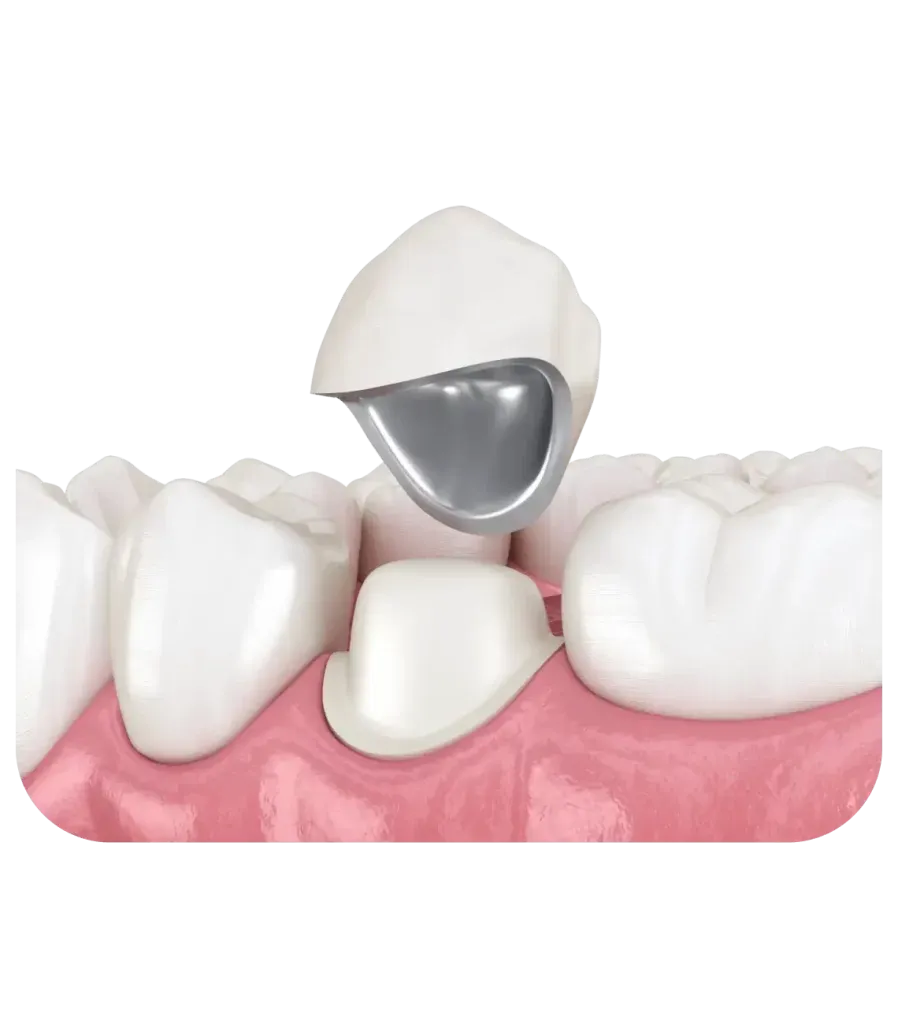
A metal ceramic crown restores a damaged or weakened tooth with a strong crown that has a metal base and a ceramic coating. It is also called a porcelain fused to metal crown (PFM).
It is a practical choice for chewing teeth, where reliability, function and a clear price matter more than looks.
Before treatment we look at how much of the tooth is left and how hard it works, and tell you straight away if another crown would serve you better.
What is a porcelain fused to metal crown
It is a fixed prosthetic structure made of a metal framework with a layer of ceramic on top.
The metal base gives the crown its strength, and the ceramic coating restores the anatomical shape and the look of the tooth.
Such a crown is mostly placed on chewing teeth, and we can also use it on other teeth when it suits the function and the look of the tooth.
When a metal ceramic crown is indicated
When we choose another crown
A metal-free crown is usually the better choice if:
• the crown is planned in the smile zone
• a very natural look and translucency of the tooth matter
• you have thin gums and high aesthetic demands
• a completely metal-free structure is needed
In such cases we more often choose zirconia crowns or E.max crowns.
Metal ceramic, zirconia or E.max: how they differ
| Criterion | Metal ceramic crown | Zirconia crown | E.max crown |
|---|---|---|---|
| Strength | High | Very high | High |
| Appearance | Neat | Very natural | Very natural |
| Suitable for chewing teeth | Yes | Yes | Limited |
| Suitable for the smile zone | Limited | Yes | Yes |
| Contains metal | Yes | No | No |
| Risk of a dark line at the gum | Possible | No | No |
| Service life | Many years | Many years | Many years |
| Cost | The most affordable | Higher | Higher |
Result of metal ceramic crown placement
Metal ceramic crown price
A classic option with a metal base and a ceramic coating. It suits chewing teeth, where strength and function matter.
The plan and the budget are clear before you start.
Stages of metal ceramic crown placement
We examine the tooth, take an image and judge whether a crown can restore it reliably.
You hear at once what we will do, how long it will take and what result to expect.
We shape the tooth for the crown.
If the canals were treated earlier or there was inflammation, we check that the condition is stable.
The aim is a firm base on which the crown will hold for years.
Impressions go to the laboratory.
A temporary crown protects the tooth until the permanent one is ready, so you can eat comfortably and look normal.
The finished crown is cemented.
Then we check how it closes with the opposite teeth, so that eating and speaking feel natural.
How long crown placement takes
Preparation and impressions take one visit.
The laboratory usually needs a few days to make the crown.
We name the exact timing after the examination, depending on the condition of the tooth.
What happens if the tooth is left without a crown
Metal ceramic crown FAQ
Don't put off your dental health