updated
November 12, 2026
...
read
Tooth Nerve Pain Relief: Why the Pain Spreads to the Face

When toothache spreads across the cheek, to the temple or to the ear, it is often called tooth neuralgia. The pain spreads to the face because one trigeminal nerve supplies sensation to both the teeth and the face. Relief starts with finding the cause. In practice, tooth neuralgia is not a diagnosis but an everyday name for several different conditions. Most often it is inflammation of the nerve inside the tooth itself, which is called pulpitis. Less often it is true trigeminal neuralgia, which is treated by a neurologist, not a dentist.

Why toothache spreads to the face
The teeth, the jaws and the skin of the face all receive sensation from the same trigeminal nerve. The brain cannot always tell exactly where a signal came from. That is why pain from a diseased tooth can be felt in the ear, the temple, under the eye or in the teeth of the other jaw. This is trigeminal nerve tooth pain. For the same reason, people sometimes cannot point to the tooth that hurts.
In our practice, patients with tooth neuralgia often point to a healthy tooth. The source turns out to be a neighbouring tooth or a tooth on the other jaw. So we check the whole painful side, not just one tooth.
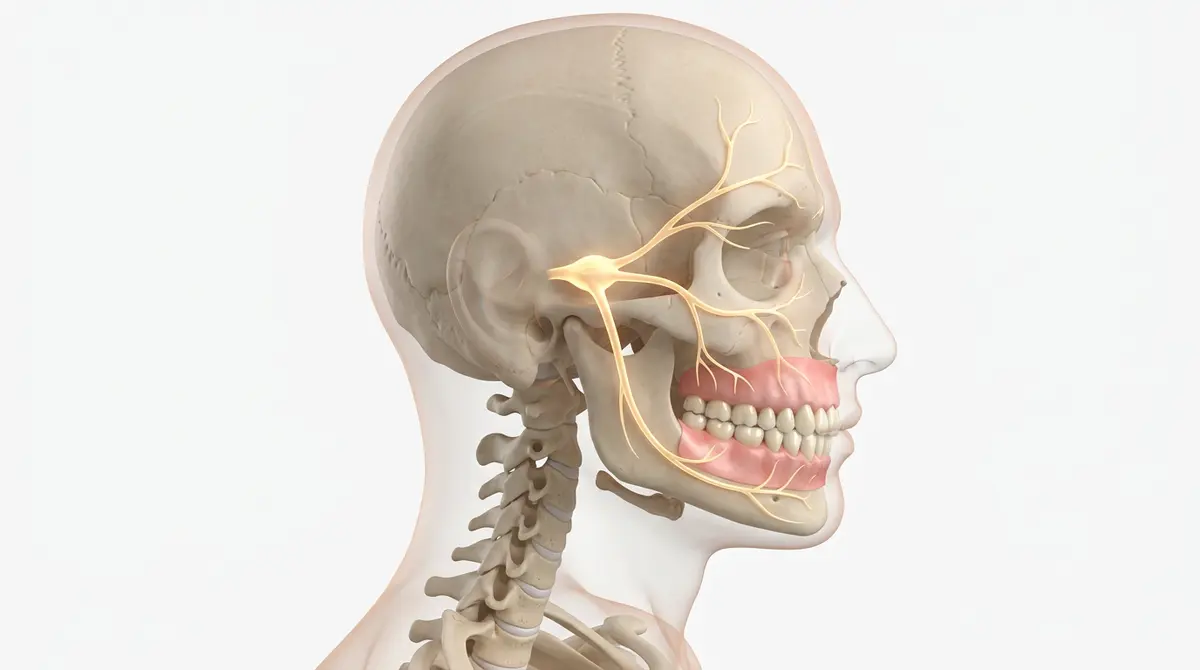
What people mean by tooth neuralgia
The character of the pain helps to tell the conditions apart.
Pulpitis, apical periodontitis or trigeminal neuralgia
| Sign | Pulpitis | Apical periodontitis (inflammation at the root tip) | Trigeminal neuralgia |
|---|---|---|---|
| What it is | inflammation of the nerve inside the tooth | inflammation in the bone at the tip of the root after the nerve has died | a disease of the trigeminal nerve itself |
| Type of pain | aching or throbbing, comes in bouts | dull, when biting | very severe, sudden, like an electric shock |
| What triggers it | hot and cold, lying down | biting, tapping the tooth | a light touch to the face, brushing teeth, eating, talking, wind |
| How long it lasts | minutes to hours, does not stop right after the trigger | constant, worse when you bite down | from seconds to two minutes, nothing may hurt between attacks |
| Who treats it | dentist | dentist | neurologist |
- Pulpitis
- inflammation of the nerve inside the tooth
- Apical periodontitis (inflammation at the root tip)
- inflammation in the bone at the tip of the root after the nerve has died
- Trigeminal neuralgia
- a disease of the trigeminal nerve itself
- Pulpitis
- aching or throbbing, comes in bouts
- Apical periodontitis (inflammation at the root tip)
- dull, when biting
- Trigeminal neuralgia
- very severe, sudden, like an electric shock
- Pulpitis
- hot and cold, lying down
- Apical periodontitis (inflammation at the root tip)
- biting, tapping the tooth
- Trigeminal neuralgia
- a light touch to the face, brushing teeth, eating, talking, wind
- Pulpitis
- minutes to hours, does not stop right after the trigger
- Apical periodontitis (inflammation at the root tip)
- constant, worse when you bite down
- Trigeminal neuralgia
- from seconds to two minutes, nothing may hurt between attacks
- Pulpitis
- dentist
- Apical periodontitis (inflammation at the root tip)
- dentist
- Trigeminal neuralgia
- neurologist
Other conditions cause similar pain too: sinusitis, overstrained chewing muscles and, sometimes, migraine. Problems with the temporomandibular joint, the joint of the lower jaw in front of the ear, do the same.
Trigeminal neuralgia in numbers
Trigeminal neuralgia is a rare condition. Data from the UK National Health Service, NHS:
Why it is important not to rush into extraction
Sometimes what looks like tooth neuralgia turns out to be trigeminal neuralgia. In that case, treating or removing healthy teeth does not help. According to international studies, in one group of 117 patients about 42% had dental treatment before their neuralgia was treated. This figure applies only to the participants of that study. That is why we first check the teeth with an examination, tests and X-rays. If we do not find a dental cause, we advise you to see a neurologist.
Medicines for trigeminal neuralgia are chosen by a neurologist. Ordinary painkillers usually give little relief.
Can't tell which tooth hurts?
We will check your teeth with tests and X-rays and look for the source of the pain.
See a doctor straight away if
- the pain is severe and ordinary remedies do not relieve it;
- the face or gum has swollen;
- you have a raised temperature;
- half of your face has gone numb or the facial muscles have weakened.
The information in this article is for general information and does not replace a doctor's consultation.
How to find the cause
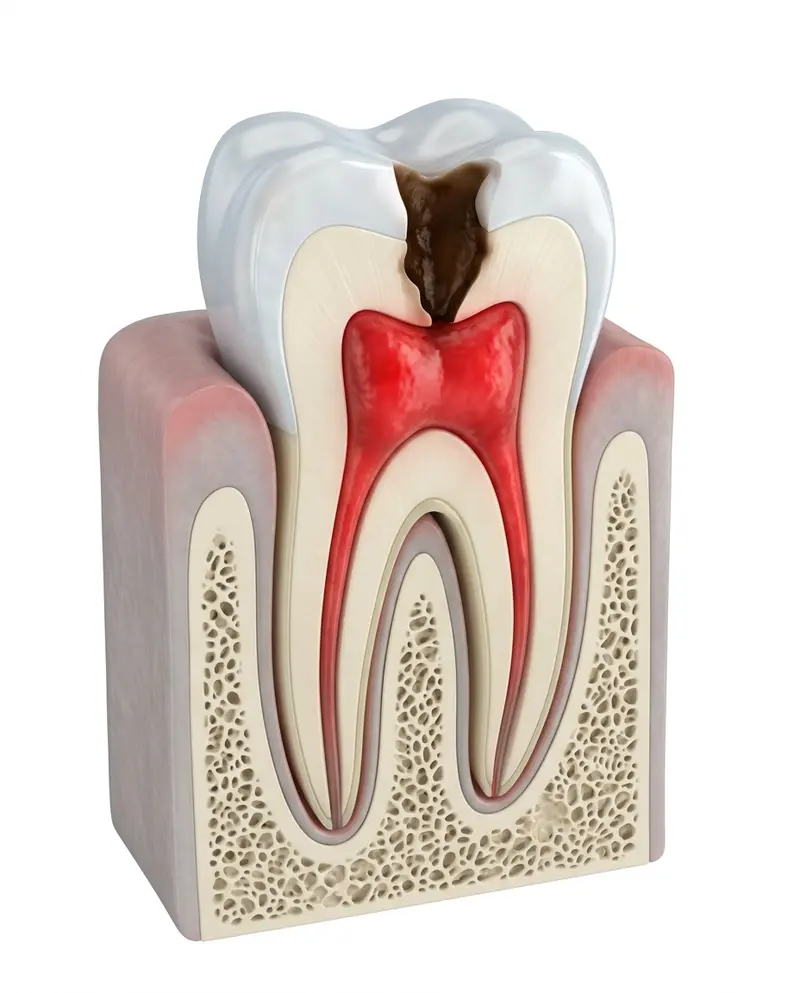
At the examination we check how the teeth react to cold and tapping. Where indicated, we take close-up X-rays or a CBCT scan (3D dental scan). If the cause is in a tooth, we treat it as part of restorative dentistry. With pulpitis, root canal treatment is usually needed. Its aim is to remove the source of the pain and keep the tooth.
If the teeth are healthy and the pain feels like electric shocks, you need a neurologist. The neurologist confirms the diagnosis and chooses the treatment. Sometimes magnetic resonance imaging is ordered to rule out compression of the nerve.
What to write down before your visit
- when the pain began and how long an attack lasts
- what triggers it: cold, hot, biting, a touch to the face
- where it hurts and where it spreads
- whether painkillers help
- which teeth have been treated recently
Prices for diagnosis and treatment at Cristi Dent
Prices are valid as of 19 October 2026. We determine the scope of treatment after the examination and X-rays. More on the endodontics page.
Does the pain spread to the ear or temple?
Book a consultation: first of all, we will rule out dental causes.
Where to go
If tooth neuralgia bothers you and the pain spreads to the face, start with a dentist. Tooth nerve pain relief begins with finding the cause, so the examination must rule out dental causes first. We carry out root canal treatment when the cause of the pain is the nerve of the tooth. You can book at Cristi Dent in Chișinău.
Sources
- NHS. Trigeminal neuralgia www.nhs.uk/conditions/trigeminal-neuralgia
- NHS. Toothache www.nhs.uk/symptoms/toothache
- Tripathi M et al. Please spare my teeth! Dental procedures and trigeminal neuralgia. Surg Neurol Int. 2020;11:455 pubmed.ncbi.nlm.nih.gov/33408940
- Systematic review and recommendations for nonodontogenic toothache. J Oral Rehabil. 2014;41(11):843-852 pubmed.ncbi.nlm.nih.gov/25040436
Trigeminal neuralgia vs tooth pain in brief
Pulpitis is tied to a particular tooth and to temperature: the pain starts with something cold or hot and fades slowly. Trigeminal neuralgia is set off by a light touch to the skin, and the attack is short and sharp.
What not to do
- demand that a tooth is removed before the cause of the pain is found;
- warm the cheek when you have toothache;
- exceed the dose of painkillers;
- put off a visit if the pain wakes you at night.
Frequently asked questions
It all depends on the cause. If the nerve inside the tooth hurts, we carry out root canal treatment to remove the source of the pain. If it is trigeminal neuralgia, the treatment is chosen by a neurologist, usually with medicines and sometimes with surgery.
Yes. Pain in a tooth sometimes comes from sinusitis, the chewing muscles, the jaw joint or the trigeminal nerve itself. That is why we check the teeth with tests and X-rays and do not remove them at random.
Signals from the teeth and the face travel along one trigeminal nerve, and the brain does not always tell the source apart. So pain from a single tooth can be felt across the whole jaw, in the ear or in the temple.
According to the NHS, an attack lasts from a few seconds to two minutes. Attacks can recur over days, weeks or months and alternate with pain-free periods.
Dental causes are more common, and it is important to rule them out first. We will check your teeth, and if they are healthy, we will tell you which specialist to see.
ARTICLE AUTHOR
Carries out root canal treatment and retreatment, restoration of badly damaged teeth and preparation of teeth for further prosthetics.