Dental Implant Removal in Chișinău
Dental implant removal is needed when an implant has failed to integrate, has become loose or is surrounded by inflamed, shrinking bone. It is also needed when the implant's position rules out a proper crown, the artificial tooth fixed on top of it. Our surgeon takes the implant out as gently as possible, preserves the bone and plans straight away how to restore the tooth. The operation is performed by an implant surgeon, and the plan for further treatment is drawn up from a CBCT scan (3D dental scan).
When an Implant Has to Be Removed
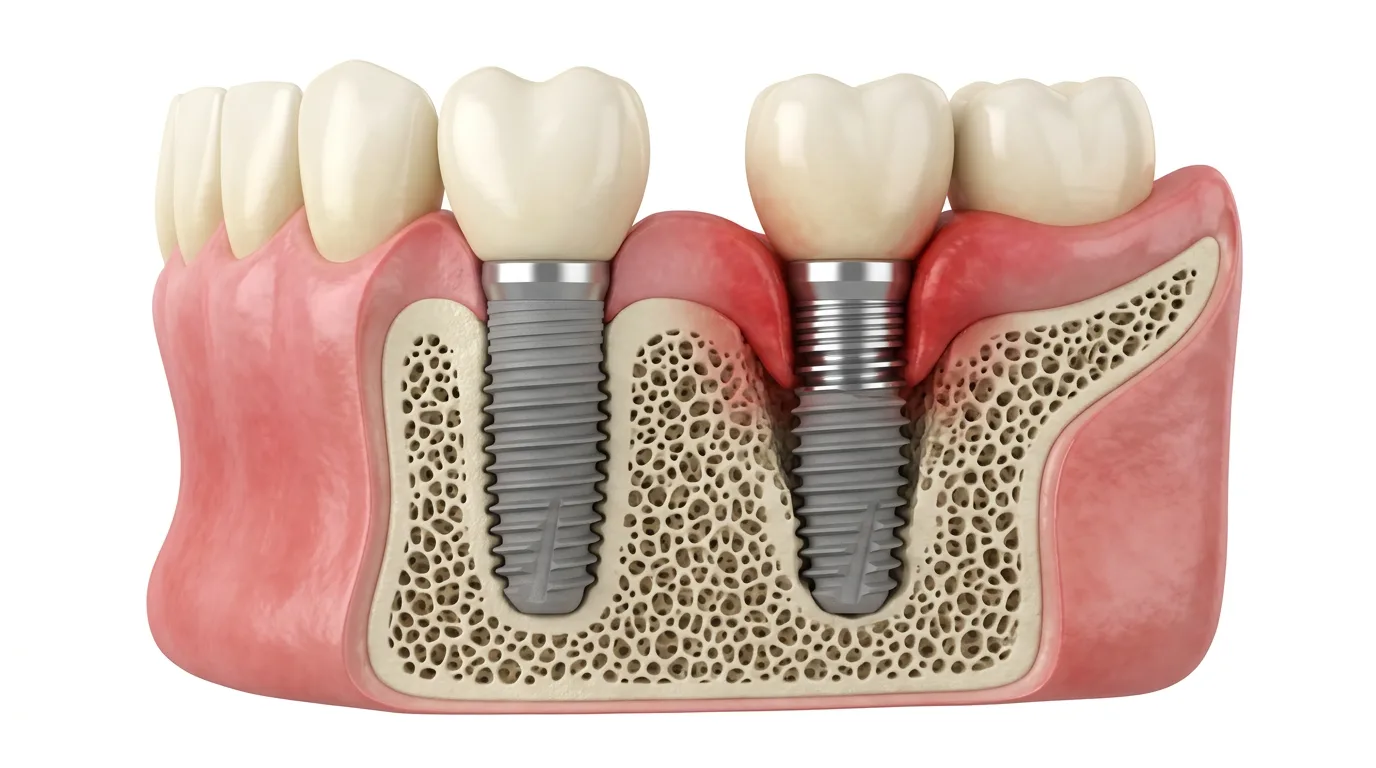
Most implants last for many years, but problems sometimes occur. The most common reason for implant removal is peri-implantitis: inflammation of the tissues around the implant that gradually destroys the bone. The risk of peri-implantitis is raised by poor hygiene, smoking, a history of gum disease and uncontrolled diabetes.
In the early stages we treat peri-implantitis without removal: we clean the implant surface, remove inflamed tissue and sometimes rebuild the bone. In our experience the result depends largely on how early treatment begins. Sometimes the bone around the implant is badly damaged, the implant wobbles or the inflammation keeps returning. Then there is no point in keeping it, because it keeps destroying the bone. In such cases the implant is removed.
Other Reasons for Implant Removal
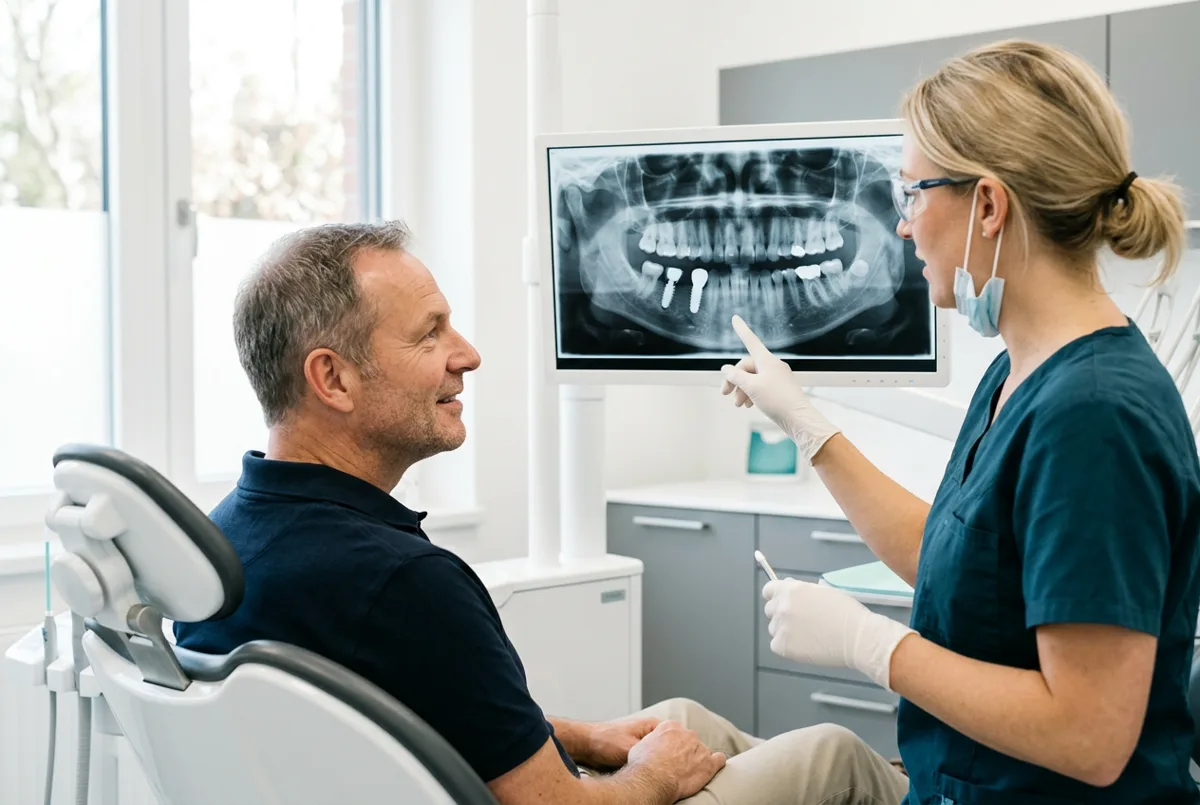
Besides peri-implantitis, an implant may have to come out for one of these reasons: it failed to integrate in the first months after placement and became loose; it was placed at the wrong angle; it sits too close to a neighbouring tooth, nerve or sinus; the implant or its inner part has broken, or its position makes an aesthetic and functional crown impossible. In every case the doctor first assesses whether the implant can be saved, and only then proposes removal.
Treat or Remove: How We Decide
Situation | What the doctor usually suggests |
|---|---|
Gum inflammation around the implant without bone loss | Professional cleaning, better hygiene, monitoring |
Peri-implantitis with moderate bone loss | Treatment that keeps the implant |
Marked bone loss, loose implant | Implant removal and bone restoration |
Implant failed to integrate | Removal and a new implant after healing |
Wrong position, crown impossible | Removal and a new implant in the correct position |
The decision is made from an examination and scans. A CBCT scan shows how much bone is left around the implant and what the situation will be after removal. This matters for planning: the doctor knows in advance whether a new implant can be placed straight away, whether bone grafting is needed or whether it is better to wait for healing.
When Removal Can Be Avoided
If inflammation affects only the gum and the bone is intact, the implant is treated: we clean it, correct hygiene habits and, if necessary, replace a crown that gets in the way of cleaning. Treatment of the tissues around teeth and implants is handled by our periodontology doctors. If the problem lies in the crown rather than in the implant itself, replacing the crown is enough. That is why it is important to find the exact cause before removal.
Results of Implant Removal
Removing the problem implant stops the destruction of bone.
Gentle extraction leaves more bone for the new implant.
From the CBCT scan we plan at once how to restore the tooth.
After healing, a new implant can be placed in the correct position.
Implant Removal Cost
Extraction of the implant and treatment of the implant site.
Restoring bone for a new implant.
Assessing the bone around the implant and planning.
Dental implant removal costs 1,000 MDL. If bone has to be restored for a new implant, bone grafting for 1 implant costs 6,000 MDL. The new implant is paid for separately: Alpha Bio 4,000 MDL, MegaGen AnyOne 6,000 MDL, MegaGen AnyRidge and Blue Diamond 8,000 MDL each. A CBCT scan costs 700 MDL, and the follow-up scan is free for our patients. The doctor fixes the full plan with the final amount before treatment begins.
How Implant Removal Works
The surgeon examines the implant, takes an X-ray or CBCT scan and assesses the bone and the inflammation.
The doctor explains whether removal is needed and discusses at once how the tooth will be restored.
The operation is done under local anaesthesia.
If necessary, the crown and the abutment (the connector between the implant and the crown) are taken off first.
A loose implant is unscrewed. One that has integrated is taken out with special instruments, carefully preserving the bone.
The socket is cleaned of inflamed tissue and, where indicated, bone graft material is placed at once and stitches are applied.
How Long It Takes
If the implant is loose, removal takes a few minutes. Taking out an integrated implant is harder and takes longer, usually up to an hour. After the operation, swelling and moderate pain are possible for a few days. A new implant is placed either at once, if there is enough bone and no inflammation, or a few months later, after healing and bone restoration. Once the new implant has integrated, we move on to prosthetics on implants.
What Happens If a Problem Implant Is Not Removed
The inflammation keeps destroying the bone around the implant.
The inflammation can reach the bone under adjacent teeth.
The more bone is lost, the harder and more expensive a new implant becomes.
A permanent source of infection in the mouth is bad for gum health.
Who Performs the Operation
Removal and re-implantation are done by our implant surgeon and periodontist Roman Casian. He completed postgraduate training and earned a master's degree in periodontology at University College London (Eastman Dental Institute). He is a member of the International Team for Implantology (ITI) and won the international MegaGen MegaMind competition for implant surgeons. His practice also includes treating complications after unsuccessful surgical treatment. You can read more about our surgical services in the surgical dentistry section, and about new implants in the dental implants section.
To make a new implant last, regular hygiene, professional cleaning and scheduled check-ups are important. Smoking and poorly controlled diabetes raise the risk of inflammation returning, so your doctor discusses these factors before the new implant is placed.
Implant Removal: Frequently Asked Questions
Don't put off your dental health


