updated
November 12, 2026
...
read
Halitosis: Dental Causes of Bad Breath

Halitosis, or persistent bad breath, starts in the mouth rather than in the stomach in most cases. According to international studies, the mouth accounts for 80-90% of cases. In our practice it is most often a coating on the tongue, inflamed gums, cavities and tartar. So a dentist is usually the first specialist to see for chronic bad breath.

What is halitosis
Halitosis is the medical name for persistent bad breath. It is not a separate disease but a symptom, so there is always a cause of bad breath behind it. A physiological smell is normal, for example in the morning or after spicy food. A pathological smell is linked to a disease.
We single out one more case: a person feels that their breath smells, but the people around notice nothing. If the fear stays after treatment, it is called halitophobia (a persistent fear of having bad breath). Then one more mouthwash does not help. What helps is a calm, objective examination and a talk with the doctor.
What causes bad breath: where the smell comes from
So what can cause bad breath? Most often the mouth itself, and less often the rest of the body.
Sources in the mouth
- coating on the back of the tongue, especially in the rear third
- pockets of inflamed gum in gingivitis (inflammation of the gum) and periodontitis (inflammation of the tissues around the tooth)
- cavities and overhanging edges of old fillings
- gaps between teeth where food gets stuck
- poorly fitting dentures and a flap of gum over an erupting wisdom tooth
Causes outside the mouth
- dry mouth, including from medicines
- tonsillitis and inflammation of the nasopharynx (the upper part of the throat behind the nose)
- acid reflux
- fasting and strict diets, smoking
- some general diseases, for example diabetes
Why does my breath smell so bad? Bad breath causes in the mouth
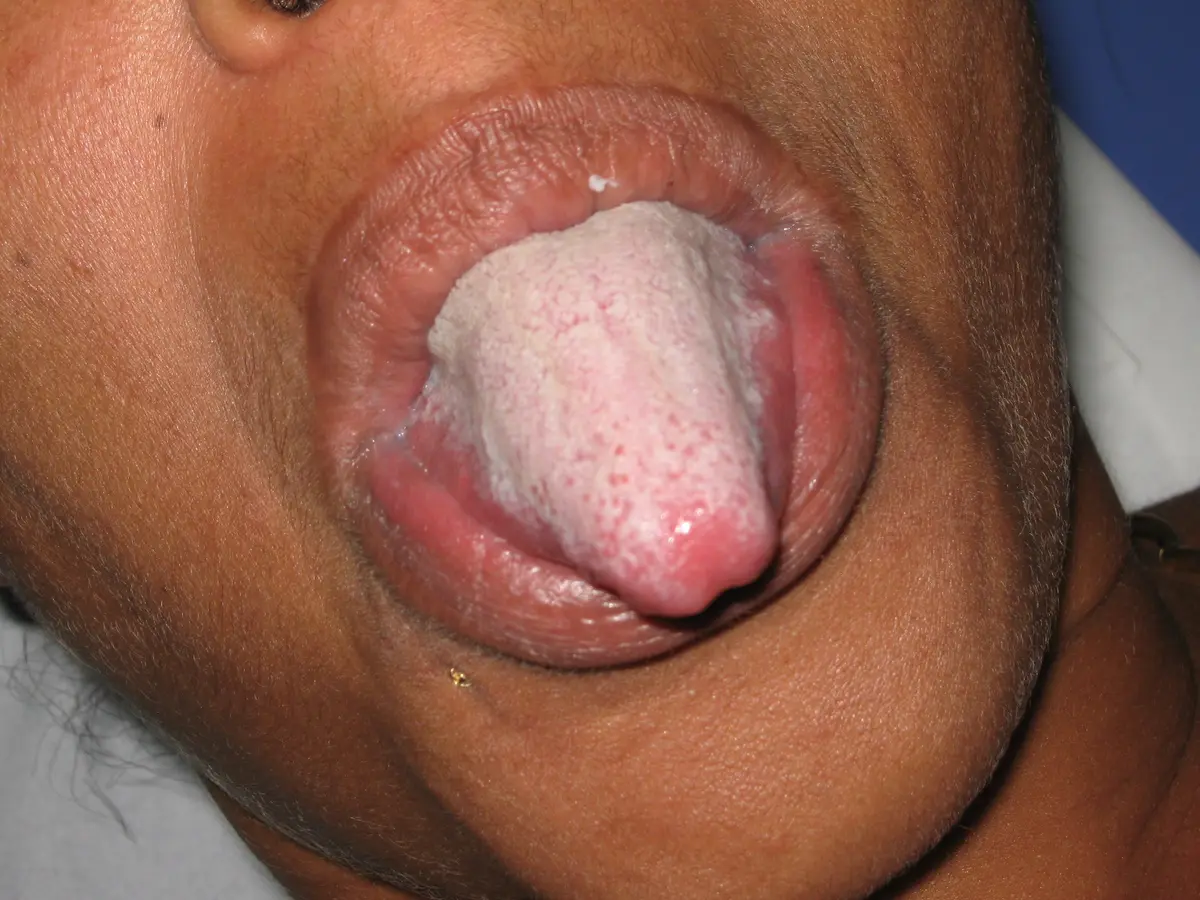
The source of the smell is volatile sulphur compounds. They are produced by bacteria that break down leftover protein. Most of these bacteria live on the back of the tongue and in the gum pockets, that is, in the gaps between gum and tooth.
Tartar (hardened plaque) also makes bad breath worse. Its rough deposits hold plaque and bacteria at the gum edge, and the brush does not remove them from there.
Do cavities cause bad breath
Yes. Food and bacteria collect in a cavity and under the edge of an old filling. Can cavities cause bad breath even if you brush twice a day? They can, because the brush does not reach those places.
Bad breath after sleep
A morning smell is normal. At night less saliva is produced, and the bacteria on the tongue work harder. After brushing and breakfast the smell goes. It is worrying if it does not go away during the day.
Bad breath after tooth extraction
In the first days after an extraction a slight smell is possible: the socket (the hole left by the tooth) is healing, and the area has to be cleaned gently. A sharp smell, pain in the socket that keeps growing and a putrid taste may mean the socket is inflamed. Then we ask you to come for an examination.
Chronic bad breath: why the smell stays even after brushing
Usually because brushing does not reach the main source. The brush does not clean the tongue or the gaps between teeth. Bacteria in deep gum pockets and in cavities are out of its reach.
At appointments we often see the same picture. A person brushes twice a day and has tried several pastes and mouthwashes, but the smell stays. At the examination we find a coating on the back of the tongue, tartar under the gum or an old filling that food gets under. Chronic bad breath that does not go away after several weeks of careful care is a reason to see a dentist.
When bad breath is a reason to visit
- the smell lasts for weeks despite care;
- the gums bleed, hurt or swell;
- a tooth hurts or teeth are loose;
- an unpleasant taste comes with pain and fever;
- there are problems with a denture.
The information in this article is for general guidance and does not replace a consultation with a doctor.
Does the smell stay after brushing?
We will find the source: the tongue, the gums, tartar or old fillings.
How to treat halitosis
We treat halitosis through its cause, so diagnosis comes first. We examine the tongue, gums and teeth, assess the gum pockets and take X-rays if needed. What follows depends on what we find.
Hygiene
We carry out professional cleaning and remove tartar.
Caries and fillings
We treat caries and replace leaking fillings.
Gums
We treat gingivitis or periodontitis.
Training
We show how to clean the tongue and the gaps between teeth.
Chlorhexidine is an antiseptic. Mouthwashes with it suppress bacteria well, but with long use they stain the teeth. So we prescribe them only as a course. If we find no cause in the mouth, we refer you to a general practitioner or an ENT doctor (a specialist in ear, nose and throat diseases).
How to get rid of bad breath at home
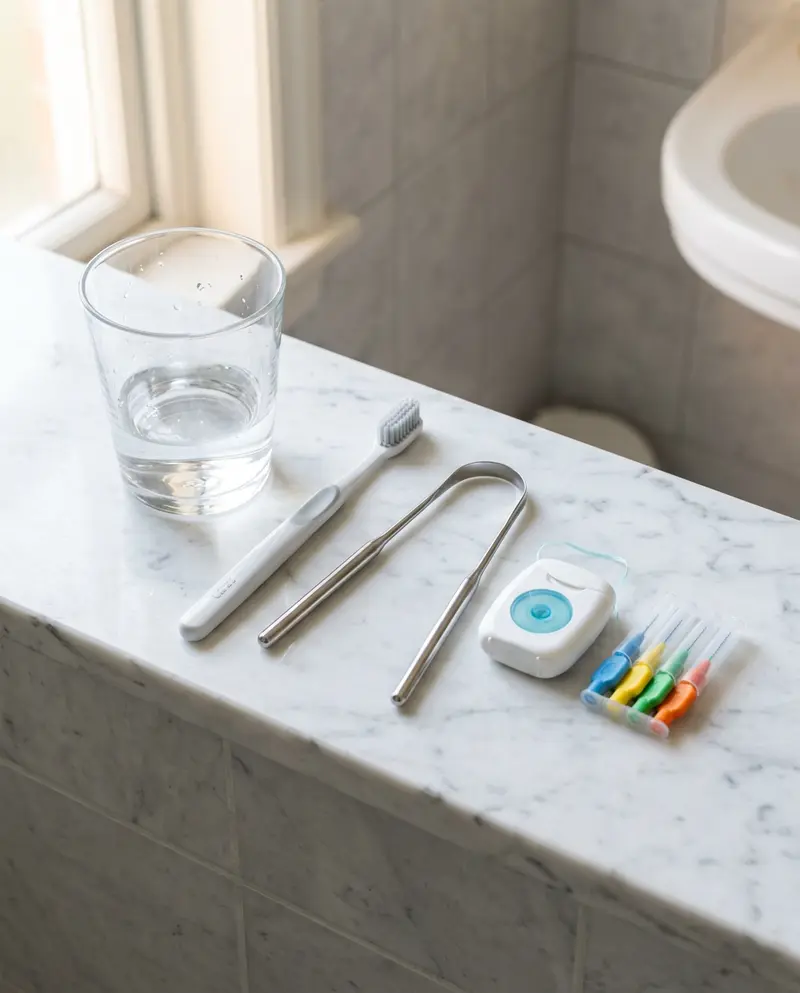
What works
- brushing twice a day with a fluoride toothpaste
- cleaning the tongue with a scraper once a day
- floss or interdental brushes (small brushes for the gaps between teeth) every day
- taking dentures out at night and cleaning them
- drinking enough water and not smoking
What only masks the smell
- fresh-breath sprays and lozenges
- chewing gum instead of cleaning
- mouthwash instead of a visit to the doctor
- alcohol rinses that dry the mouth
According to a clinical study, a tongue scraper reduces the amount of odorous compounds better than a toothbrush. But only ten people took part in that study, so we advise whatever you find easy to use every day.
After spicy food you can use sugar-free chewing gum. We described the early signs of caries, including the smell, in the article on cavity symptoms you should not ignore. Regular prevention is part of our dental hygiene and prevention service.
Prices at Cristi Dent
AirFlow is cleaning with a jet of water, air and fine powder. Prices are valid as of 19 October 2026. More about the price and what the procedures include on the professional hygiene page.
Does the smell keep coming back?
Book professional hygiene: after it we will check whether any other causes are left.
Where to go
If bad breath does not go away, start with an examination by a dentist and professional cleaning. We carry out professional teeth cleaning with ultrasound and AirFlow. You can book it at Cristi Dent in Chișinău. After it we will assess whether any other causes of the smell remain.
Sources
- Zalewska A et al. Halitosis: a common medical and social problem. A review on pathology, diagnosis and treatment. Acta Gastroenterol Belg. 2012;75(3):300-309 pubmed.ncbi.nlm.nih.gov/23082699
- Renvert S et al. The Underestimated Problem of Intra-Oral Halitosis in Dental Practice: An Expert Consensus Review. Clin Cosmet Investig Dent. 2020;12:251-262 pubmed.ncbi.nlm.nih.gov/32753975
- Pedrazzi V et al. Tongue-cleaning methods: a comparative clinical trial employing a toothbrush and a tongue scraper. J Periodontol. 2004;75(7):1009-1012 pubmed.ncbi.nlm.nih.gov/15341360
- StatPearls. Halitosis www.ncbi.nlm.nih.gov/books/NBK534859
- NHS. Bad breath www.nhs.uk/conditions/bad-breath
- NHS. Gum disease www.nhs.uk/conditions/gum-disease
- StatPearls. Pericoronitis www.ncbi.nlm.nih.gov/books/NBK576411
Images in the article: coating on the tongue: Grook da oger, CC BY-SA 3.0, Wikimedia Commons.
Types of bad breath smells: which one should worry you
A persistent smell that does not go away after cleaning the teeth and tongue should worry you, as should a putrid taste with pain or bleeding gums. A sweetish smell of acetone or a smell of ammonia is a reason to see a general practitioner.
What to do before the visit
- do not mask the smell with chewing gum or spray on the day of the examination;
- bring a list of the medicines you take;
- recall when the smell appeared and whether it gets worse in the morning.
Frequently asked questions
Through its cause: we carry out professional hygiene, treat caries and gums and teach you to clean the tongue every day. Fresheners and chewing gum only mask the smell for a short time.
An ordinary alcohol-free mouthwash can be used daily as an addition to brushing, but not instead of it. We prescribe mouthwashes with chlorhexidine only as a course, because they stain the teeth.
It can, but less often than it seems: in most cases the source is in the mouth. So it is worth starting with a dentist. If we find no cause in the mouth, we refer you to a general practitioner.
Yes. The coating on the back of the tongue is one of the main sources of the smell. A scraper reduces the amount of odorous compounds better than a toothbrush, but a brush also helps if you clean the tongue every day.
Book an examination and professional hygiene at Cristi Dent. We will find the source of the smell and advise how to care for your mouth.
ARTICLE AUTHOR
Carries out professional oral hygiene, teaches tooth care and prevents gum disease, to maintain the health of the mouth and the result of treatment.