All on 4 Dental Implants in Chișinău
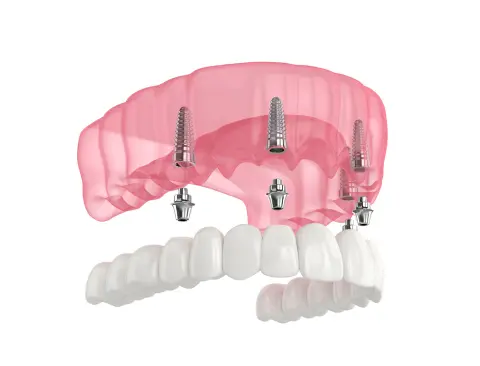
All on 4 dental implants restore a full arch of teeth on four implants, with a non-removable prosthesis fixed to them. The method is used when all teeth, or nearly all, are missing. It brings back chewing and a natural smile without a classic removable denture.
It is the most affordable of the full-arch implant protocols, and it can be considered even when there is not much bone.
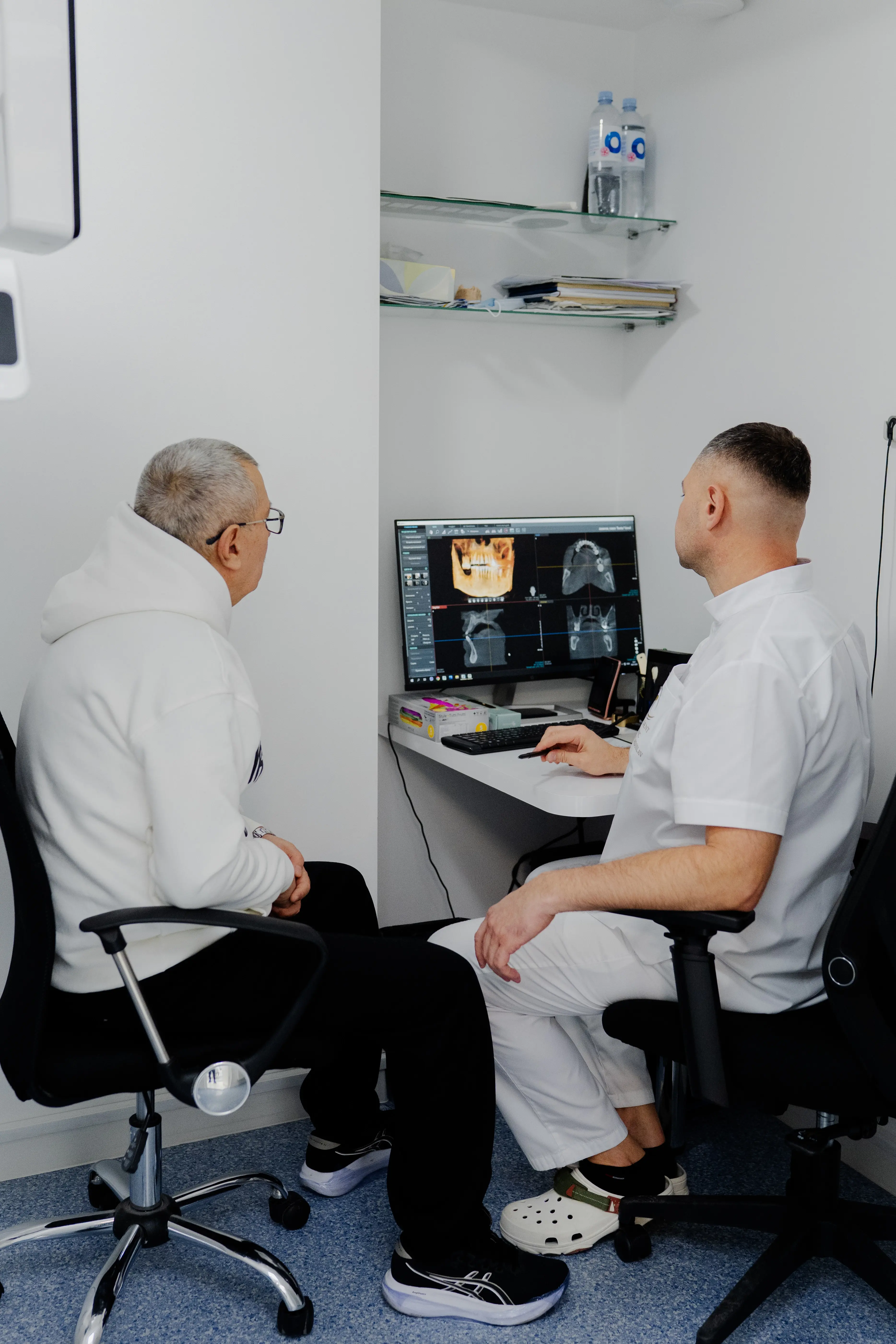
Before treatment we take a CBCT scan (3D dental scan) and assess bone volume, bite and the expected load. Then our doctor explains whether the protocol suits you and what the treatment will involve.
When All on 4 dental implants are suitable
- All teeth are missing in the upper or lower jaw
- The remaining teeth are destroyed and cannot be saved
- A removable denture does not stay in place, rubs or gets in the way of speech
- There is not enough bone for a larger number of implants
- There is no bruxism (teeth grinding) or excessive chewing load
- You need fixed teeth on a sensible budget
Features of the All-on-4 protocol
| Criterion | All-on-4 |
|---|---|
| Number of implants | 4 |
| Stability of the structure | Sufficient for standard cases |
| Distribution of chewing load | The main load falls on the rear implants |
| Bone volume required | Can be done even when bone is limited |
| Risk of implant overload | Higher with a strong bite |
| Who it suits | Patients without bruxism or excessive chewing load |
| Cost | The most affordable of the full-arch implant protocols |
How the implants are placed
A full prosthesis is fixed on four implants. The two front implants are usually placed vertically, while the position of the rear ones is set by the surgical plan, taking into account anatomy and bone volume.
The protocol is an option when all teeth are missing or the remaining ones cannot be saved. We decide whether treatment is possible after the CBCT scan and an assessment of the jaw.
You get a fixed structure and no longer need an ordinary removable denture.
All-on-4 or more implants?
With All-on-4, the main chewing load falls on the rear implants, so we recommend the protocol more often to patients without bruxism or excessive chewing load. With a strong bite or bruxism, the doctor may suggest All-on-5 or All-on-6 implants instead: the extra supports spread the load more evenly. The doctor makes the final choice of protocol after the CBCT scan and an assessment of the jaw.
When All-on-4 may not be suitable
It may not be recommended if:
- There are serious contraindications to implants.
Uncontrolled diabetes, blood diseases, cancer, or medication that slows healing. - The bone has shrunk so much that it cannot hold implants,
even tilted ones or with additional bone techniques. - The chewing load is very high or there is bruxism that cannot be controlled.
This raises the risk of overloading the structure. - You still have teeth that can be restored.
In that case, rebuilding the whole jaw may be excessive.
Results of All on 4 implants
The prosthesis is fixed in place, so it does not come out and does not need constant attention in daily life.
The structure is rigidly fixed, so it does not wobble, rub or cause awkward situations.
In time you can eat your usual food instead of adapting your diet to weak or missing teeth.
It is not a stopgap prosthesis for now, but a permanent one, built to last for years. Over time it may need adjustment or repair, which we check at follow-ups.
Price of All on 4 implants in Chișinău
Used for complex bone anatomy or non-standard fixation conditions.
The system is chosen from the CBCT results.
A fixed price for restoring all teeth on 4 implants.
Suitable for normal bone density and moderate chewing load.
Suitable when there is no marked bruxism or bite overload.
The system is designed for cases where extra implant stability matters during healing.
Stages of All-on-4 implant treatment
CBCT scan, assessment of bone volume, bite and load. The doctor explains whether the protocol suits you and why.
If needed, problem teeth are removed and areas of inflammation are treated. This is so that the implants integrate without complications.
Four implants are placed in one visit under the surgical protocol. The same day, the base for your future teeth is formed.
Temporary teeth are fixed, and you can talk and eat carefully with them. You do not have to go without teeth while the implants integrate.
Once the implants have integrated, the permanent non-removable prosthesis is made. This is the final version you live with every day.
How long treatment takes
• Surgery and implant placement: 1 day
The main surgical stage takes place in one visit.
• Adaptation period with temporary teeth: 2-4 months
You already have teeth, get used to the structure and gradually return to your usual food.
• Fitting the permanent teeth: after the implants stabilise
The final prosthesis is made once the implants have integrated and is fixed as the permanent solution.
Exact timing depends on the condition of the bone, the bite and the extent of treatment. The doctor gives it after the CBCT scan and consultation.
All-on-4 questions
Don't put off your dental health