Deep Caries Treatment in Chișinău

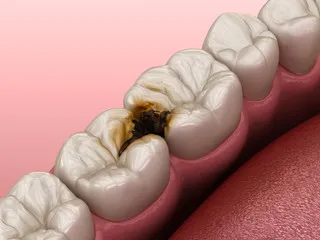
We treat deep caries when decay has spread deep into the tooth and lies close to the pulp, the soft tissue inside the tooth that holds the nerve.

Complicated caries treatment calls for more precise diagnostics and careful removal of the affected tissue. Our task is not only to restore the tooth but, where possible, to keep the pulp alive.

Our doctor assesses the depth of the decay, the condition of the tooth and the risk of complications, and then chooses the right approach.
‍

Book a consultation
terapevt

Deep Caries: What It Is

Deep caries is the stage of decay at which destruction reaches the deep layers of dentine and lies close to the pulp of the tooth.

The tooth may still have a living nerve, so deep caries does not necessarily mean pulpitis (inflammation of the pulp) or the need for root canal treatment.

Deep caries calls for especially careful work: our doctor has to remove the affected tissue while preserving as much healthy tooth structure as possible.

If inflammation has already spread to the pulp, the approach changes and endodontic (root canal) treatment may be needed.

When You Need Deep Caries Treatment

1
The tooth hurts not only from cold or sweet things but also on its own.
3
You can see a large hole in the tooth or an old filling is breaking down.
2
The pain gets worse when you chew or press on the tooth.
4
The tooth has become darker than before or looks hollow inside.
These are signs that the caries is already deep and needs urgent treatment.

When Another Treatment Is Needed

  • If the pain is constant or sharp, root canal treatment may be required.
  • If the tooth is badly broken down, a crown may be needed after treatment.
  • If there is swelling or throbbing pain, we first relieve the inflammation and then plan the main treatment.

Results of Deep Caries Treatment

1
We aim to save the tooth, even with deep decay.
2
Treatment is painless.
3
The tooth withstands chewing load.
4
The risk of repeated inflammation falls.
5
Root canal treatment can often be avoided.

Cost of Deep Caries Treatment

Complicated caries treatment
(per tooth)
1200
MDL

Toothache that will not go away?
Book a consultation: the doctor will assess your situation and tell you which treatment you need.
BOOK A CONSULTATION

Stages of Deep Caries Treatment

1
Examination and diagnostics

Our doctor assesses the depth of the decay and how close it is to the nerve. If necessary, an X-ray is taken.

2
Anaesthesia

Anaesthesia is chosen so that treatment is completely painless, even with deep caries.

3
Careful removal of the caries

Our doctor works as precisely as possible to preserve the nerve and the healthy tissue of the tooth.

4
Protecting the tooth

Special materials are used that protect the tooth and lower the risk of complications.

5
Restoring the tooth

The tooth is given back its shape and strength so that it can cope with chewing load.

How Long Treatment Takes

In most cases treatment takes 40 to 60 minutes and is done in one visit.

Sometimes a second visit is needed, if the caries is very deep and treatment is done in stages.

We tell you about this in advance.

What Happens If Deep Caries Is Not Treated

1
The pain becomes constant.
2
The caries reaches the nerve.
3
The risk of root canal treatment rises.
4
The tooth may be lost.

Frequently Asked Questions

How is deep caries different from ordinary caries?

Deep caries affects the deeper layers of the tooth and lies close to the nerve, so treatment needs greater precision and protection of the tooth.

Does deep caries always need root canal treatment?

No. If the nerve is not yet affected, the tooth can be treated without root canal treatment. This is determined at the examination.

Is deep caries treatment painful?

No. Treatment is done under anaesthesia, so there is no pain even with deep damage.

Might I need two visits?

Yes, sometimes treatment is done in stages. The doctor always warns you about this in advance.

Is the filling different after deep caries treatment?

No. The filling is matched to the colour and shape of the tooth, so the tooth looks natural and works fully.

What should I do if the tooth is sensitive after treatment?

Slight sensitivity in the first days is normal. If the discomfort does not go away, the doctor will check the tooth and, if necessary, adjust the treatment.

Not sure which treatment you need?
Book a consultation and we will examine the tooth, take an X-ray if needed and tell you which treatment you need.
BOOK A CONSULTATION

Don't put off your dental health

The Cristi Dent team at the clinic entrance in Chișinău
Treatment room at Cristi Dent dental clinic
A Cristi Dent doctor goes through a CBCT scan with a patient before treatment
Cristi Dent reception desk with an administrator and New Year decorations
Book an appointment
Thank you! We have received your request.
Sorry, the form was not sent. Please try again or call us.