Tooth Extraction in Chișinău
Tooth extraction is the removal of a tooth, or of the root that remains of it, from the jaw under anaesthesia. We extract a tooth when its crown is destroyed or missing and the remaining root cannot be safely kept and used for further restoration.
This can happen after deep decay, a fractured tooth, earlier treatment or the gradual breakdown of the tooth tissue.
Before extraction the doctor assesses the position and condition of the root, the surrounding bone and tissues, takes an X-ray if needed and decides on the best method of removal.
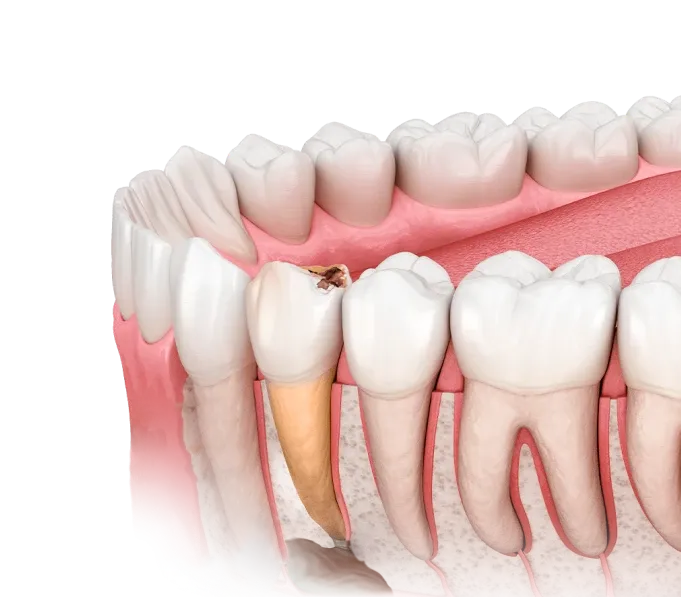
When tooth extraction is needed
Results
Tooth extraction for a broken-down or decayed root
What patients often call a "rotten tooth root" is usually tissue badly destroyed by decay, or the remaining root of a tooth whose crown has already been lost.
Extracting a decayed root may be needed if the damage is too severe to restore, if there is inflammation, or if the root cannot serve as a reliable support for further treatment.
However, severe damage does not by itself mean that the root must be removed. First the doctor assesses its condition and whether it can be saved.
Tooth extraction price
The final cost depends on the condition of the tooth, the extent of the intervention and whether additional surgical steps are needed. The doctor determines the exact price after the examination and tells you before the procedure begins.
Stages of tooth extraction
The doctor examines the tooth, assesses its condition and explains why extraction is the best solution in your situation.
You will know how the procedure will go, how long it will take and what happens afterwards.
The anaesthetic is chosen according to the sensitivity and condition of the tooth.
Extraction is painless: you may feel only pressure.
The tooth is removed carefully, with no sudden movements and no unnecessary trauma to the tissues.
The doctor works gently, so that the socket heals well and the risk of complications stays low.
After extraction the doctor treats the socket and explains which sensations are normal in the first hours and days.
You receive clear instructions for care and recovery.
What happens without extraction
Frequently asked questions
Don't put off your dental health