Metal Braces in Chișinău
Metal braces are the classic fixed orthodontic system for straightening teeth and correcting bite problems.
We fit them after diagnosis and an individual treatment plan, and the system lets the doctor control the direction and degree of tooth movement at every stage.
They are very strong, so they also suit complex tooth positions and bite problems.
What are metal braces
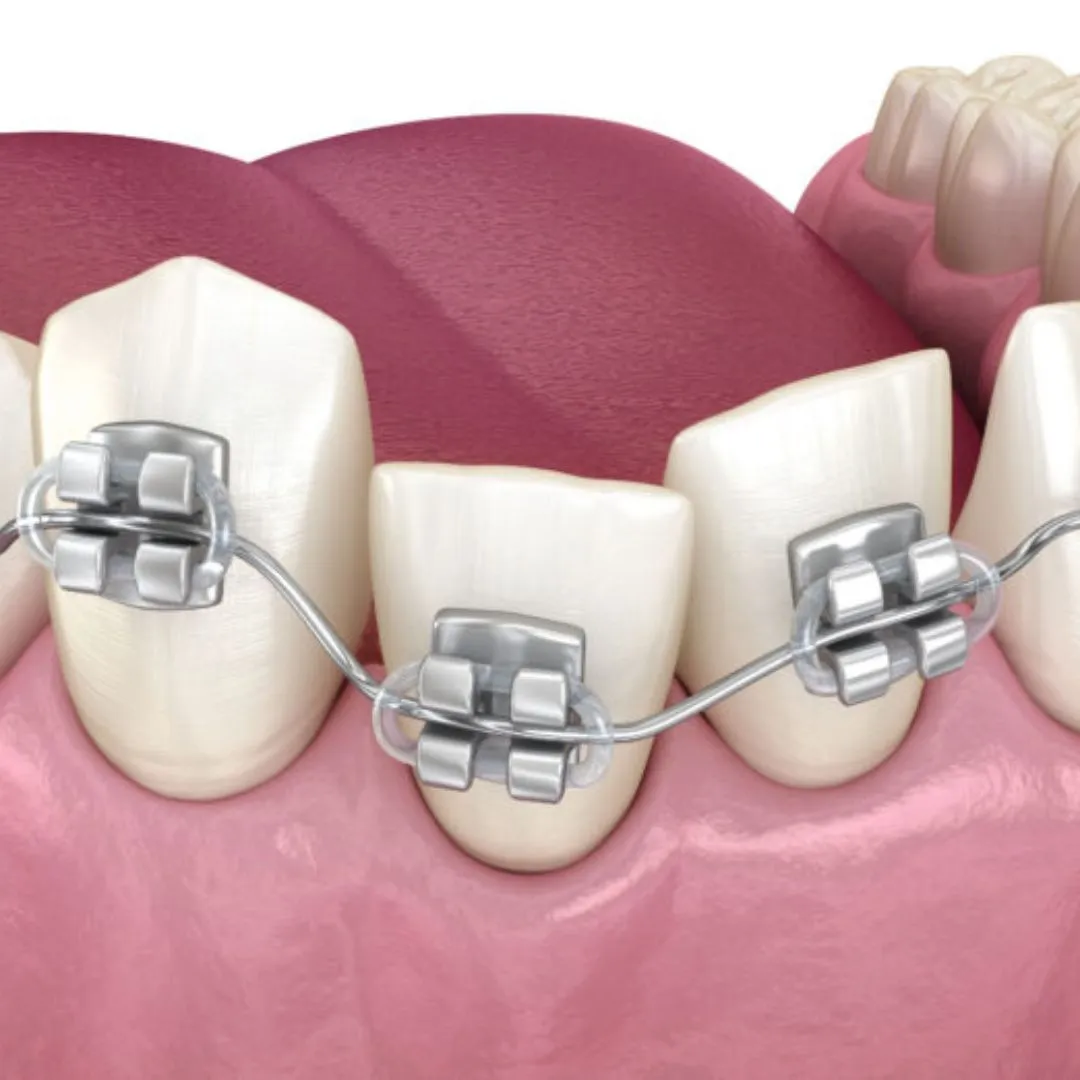
This fixed orthodontic appliance is made of small metal brackets, which are bonded to the surface of the teeth, and an archwire.
The archwire applies a controlled force, and under it the teeth gradually move into the planned position.
Metal systems differ in how the archwire is held, in their design and in other parameters. The orthodontist chooses the suitable option on the basis of your bite, the position of your teeth and the treatment plan.
When metal braces are suitable
Classic braces can be used both for relatively small tooth displacement and for more complex orthodontic problems. The orthodontist determines whether correction is possible, and how, after diagnosis.
Types of metal braces
The main types differ in how the orthodontic archwire is held.
In a classic system the archwire is held in the brackets with special ligatures: elastic rings or metal wire.
This is a proven design that lets the orthodontist control tooth movement at different stages of treatment.
In a self-ligating system the archwire is held by locks built into the brackets, so separate elastic ligatures are not needed. The choice between classic and self-ligating systems depends on the clinical situation, the treatment plan and the orthodontist's recommendation.
Comparison of orthodontic systems
| Criterion | Metal braces | Ceramic braces | Sapphire braces | Clear aligners |
|---|---|---|---|---|
| Effectiveness | Maximum | High | High | Limited in complex cases |
| Treatment control | Maximum | High | High | Depends on the patient's discipline |
| Comfort | Medium during the adaptation period | Higher | Higher | Highest |
| Visibility | Visible | Less visible | Almost transparent | Almost invisible |
| Dependence on the patient | None | None | None | Yes, worn 20 to 22 hours a day |
| Cost | Most affordable | Higher | Higher still | Highest |
Metal braces give the greatest control over treatment.
They are stronger than other systems, so the doctor can steer tooth movement precisely and work even with complex bites. That is why they are often chosen when the result matters more than being unnoticeable.
During the adaptation period you may feel pressure and mild soreness. This is the normal reaction of the teeth to movement, and it gradually passes.
Results of treatment
The system can correct even complex bite problems.
They are suitable if the teeth are badly rotated, tilted or outside the dental arch.
The doctor controls the process at every stage.
Once the teeth are aligned, veneers, crowns or prosthetics can be planned.
Metal braces prices
The doctor explains the plan and the budget before treatment begins, with no hidden stages.
How self-ligating braces differ from classic ones
Classic braces
The archwire is held with ligatures (elastics or wire). It is a reliable, proven system, but needs more frequent adjustments.
Self-ligating braces
They have a built-in lock that holds the archwire without elastics.
As a result:
• there is less friction and pressure on the teeth
• adaptation is more comfortable
• the intervals between visits can be longer
Both systems are effective. The doctor chooses the option according to your bite, the goals of treatment and your comfort.
Stages of fitting and treatment
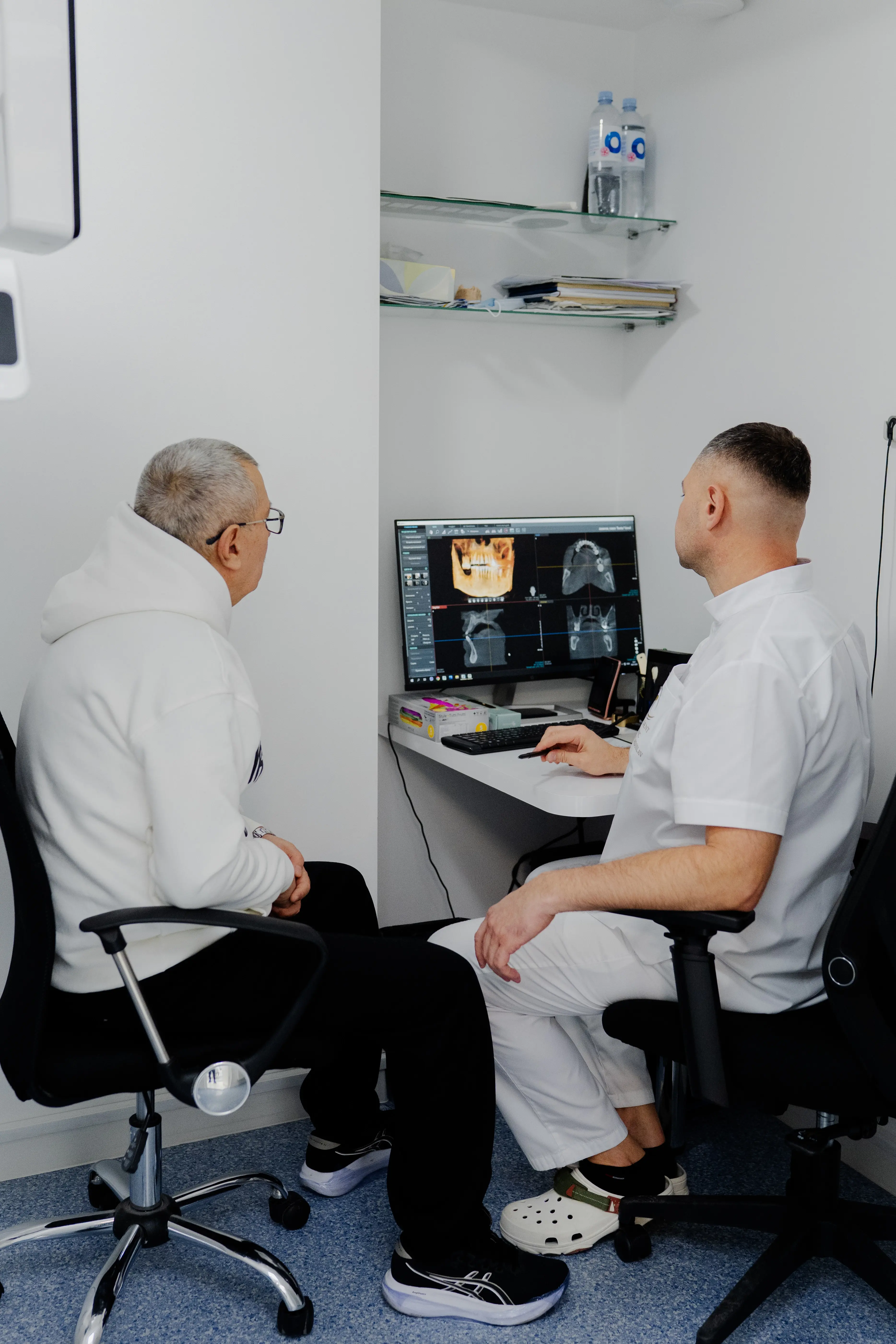
We assess the bite and the position of the teeth, take images and use digital diagnostics.
The doctor explains what exactly we will correct, the approximate timing and the suitable systems.
If there is decay or gum inflammation, we treat it first.
If everything is fine, we go straight on to fitting the braces.
The brackets are bonded to the teeth and an archwire is selected.
The procedure is painless and takes 1 to 1.5 hours on average.
The doctor explains which sensations are normal in the first days and how to adapt faster.
Scheduled visits to adjust the system and monitor tooth movement.
If needed, the doctor adjusts the treatment plan.
After the active stage, retainers are fitted to keep the new position of the teeth.
How long treatment takes
On average, treatment takes 12 to 24 months. The period depends on the complexity of the bite and how the teeth respond to treatment. The doctor gives approximate timing after diagnosis and adjusts it during treatment if needed.
When metal braces are not the best option
Then consider ceramic or sapphire braces or clear aligners.
For slight displacement, clear aligners are enough.
This system needs scheduled visits.
The doctor may recommend a different system for a more predictable result.
Frequently asked questions
Don't put off your dental health