Gum Surgery in Chișinău
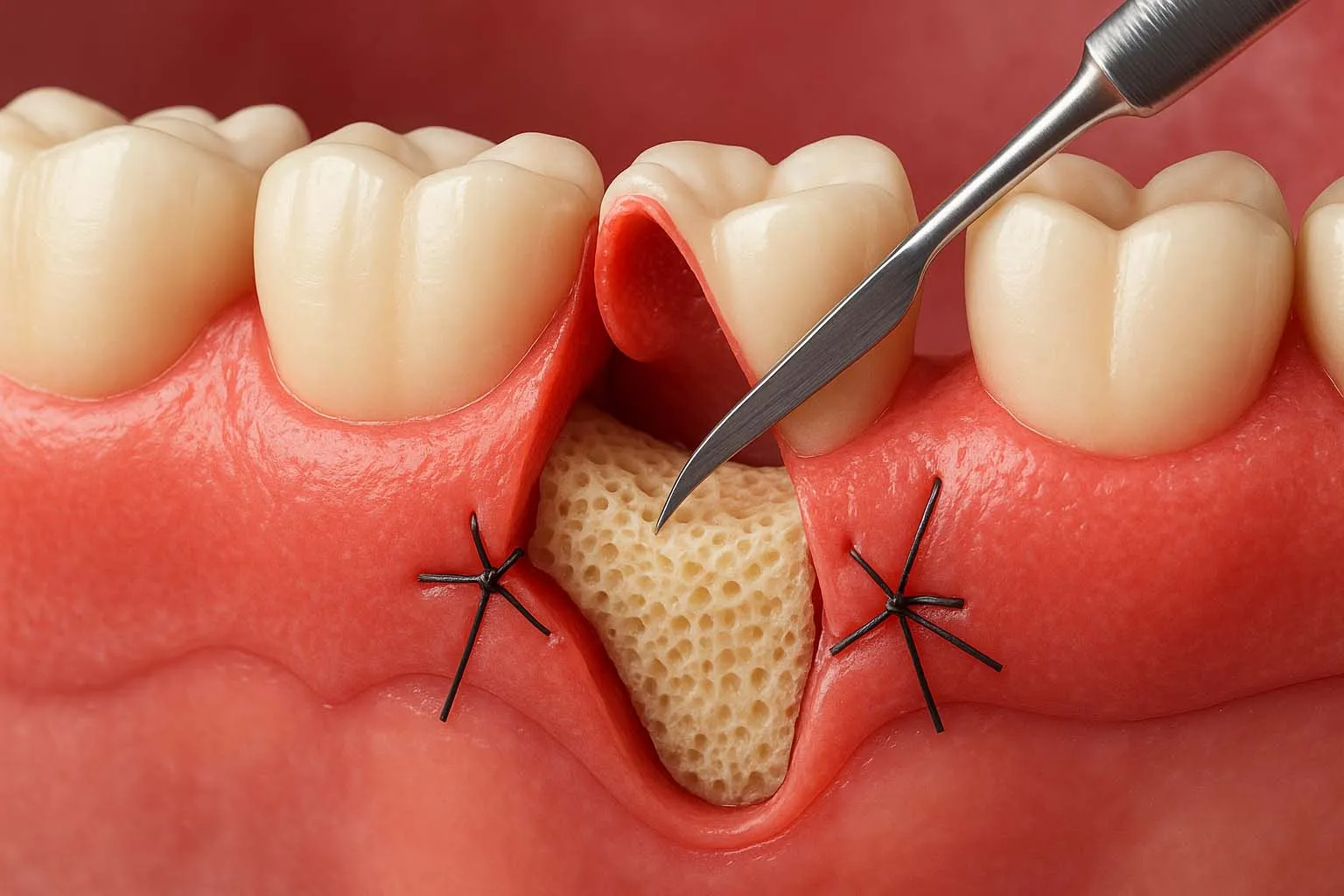
We perform gum surgery for diseases and changes of the tissues around the tooth: the gums, the periodontal ligament and other structures of the periodontium (the tissues that hold the tooth in the jaw).
The periodontium holds the teeth in place and distributes the chewing load. We turn to surgery when non-surgical methods are no longer enough or when the shape and position of the soft tissue need to change.
Depending on the clinical situation, an operation can aim to correct the gum line, lengthen the clinical crown of a tooth (the part visible above the gum), treat gum recession or prepare the tissue for later prosthetics.
What periodontal tissues are
Periodontal tissues are the group of structures that surround and support the tooth. They include the gum, the periodontal ligament, the cementum (the hard layer that covers the root) and the surrounding bone.
In periodontal disease there can be inflammation, deep periodontal pockets (gaps between the gum and the tooth), gum recession, a change in the gum contour and loss of supporting tissue.
The approach to treatment depends on the cause and the degree of change: in some cases professional teeth cleaning and non-surgical therapy are enough, and in others surgery is needed.
When gum surgery is needed
The gum surgery we perform
The doctor chooses the method individually and explains the logic of the choice.
Crown lengthening (functional)
Used when the gum covers part of the tooth and interferes with fixing a crown, with hygiene or with correct prosthetics.
The doctor carefully changes the level of the tissue to expose enough of the tooth for functional treatment.
Price:
Crown lengthening (functional), 4,000 MDL
Crown lengthening (aesthetic)
Done to correct the gum line in the aesthetic zone when the teeth look too short or the gum contour is uneven.
Price:
Crown lengthening (aesthetic), 3,500 MDL
Gum recession surgery (microsurgery)
Gum recession surgery by a microsurgical technique is used when tooth roots are exposed, when there is increased sensitivity and when the gums cause aesthetic discomfort. The procedure helps restore the gum level and protects the root of the tooth.
Price:
Gum recession surgery (microsurgery) for 1 tooth, 2,000 MDL
Gum recession surgery (microsurgery) for 2-3 teeth, 5,500 MDL
How gum surgery goes
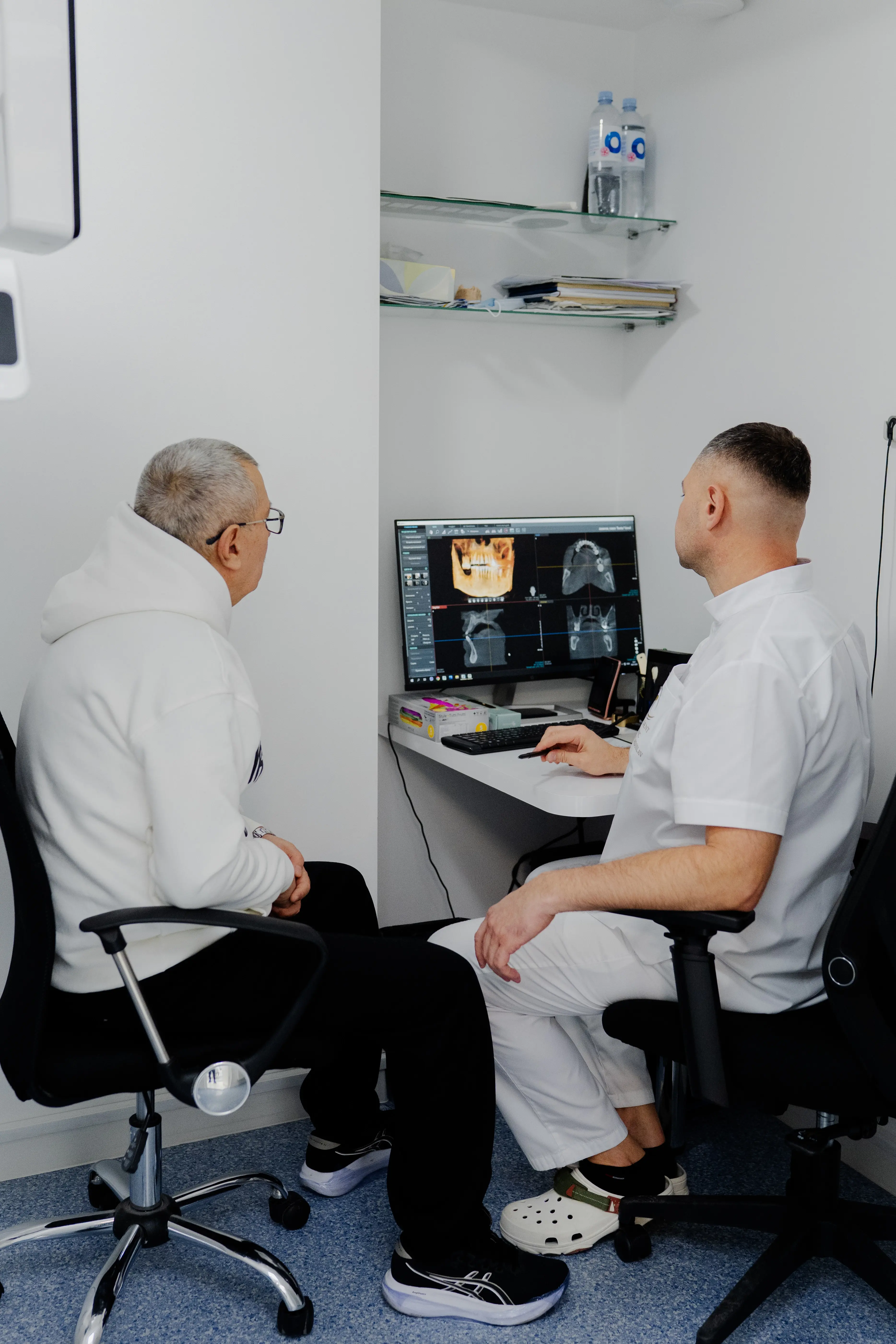
The doctor assesses the state of the gums, the depth of the lesions, the condition of the bone and the mobility of the teeth, and then explains why a surgical stage is needed in your case.
All operations are done under local anaesthesia, so there is no pain: you feel only pressure or a light touch.
The tissue is corrected or cleaned depending on the chosen method. The doctor works as gently as possible and controls every stage of the procedure.
After the gums are secured, the doctor explains how healing will go, which reactions are normal and when to come back for a follow-up examination.
Result of the operation
What happens if the operation is put off
Frequently asked questions about gum surgery
Don't put off your dental health