Gum Curettage in Chișinău
Gum curettage is a periodontal procedure that cleans the areas under the gum, the tooth roots and the periodontal pockets, the gaps between the gum and the tooth, of bacterial plaque and deposits.
Depending on the depth of the pockets and the condition of the tissues, the doctor may recommend closed or open curettage. We choose the method after an examination and diagnosis.
The main aim of subgingival curettage is to remove the deposits under the gum and create the conditions for reducing inflammation and stabilising the tissues around the teeth.

What is
gum curettage
Gum curettage, also called subgingival curettage, is the cleaning of periodontal pockets and the surface of the tooth roots from deposits under the gum and bacterial plaque. It is used for periodontal disease, when ordinary professional teeth cleaning is not enough to clean the areas beneath the gum fully.
Depending on the depth of the damage and the access needed to the tooth root, curettage can be carried out in a closed or an open way:
- without incisions (when the inflammation is shallow)
- with deeper access (when infection has gone under the gum and into the bone)
This is not a cosmetic procedure and not prevention. It is treatment, carried out when it is indicated.
When curettage is needed
We recommend the procedure if:
- your gums bleed regularly
- you have bad breath that does not go away
- you feel that the gums are pulling away from the teeth
- your teeth have become sensitive near the gum
- periodontal pockets have appeared
- the doctor sees inflammation and bone loss on the X-rays
- inflammation quickly returns after ordinary cleaning
In these situations surface cleaning is not enough, because the source of the problem is under the gum. Only subgingival curettage reaches it.
How curettage differs from professional teeth cleaning
Professional teeth cleaning
It suits regular prevention and keeping the gums and teeth healthy when:
• there is little plaque and tartar
• the gums are generally healthy
• the inflammation is superficial, with no deep problems
• you want to keep your mouth clean and fresh
• you have cleaning done regularly, without long breaks
Gum curettage
Subgingival curettage is needed when you require more than cleaning the surface of the teeth, namely treatment of inflammation deep in the tissues:
• inflammation has spread under the gum
• the tooth roots need to be cleaned of infection and deposits
• the gums bleed or do not recover after cleaning
• the destruction of tissue around the teeth needs to be stopped
Results of treatment
Gum curettage prices
(1 tooth)
How the procedure is carried out
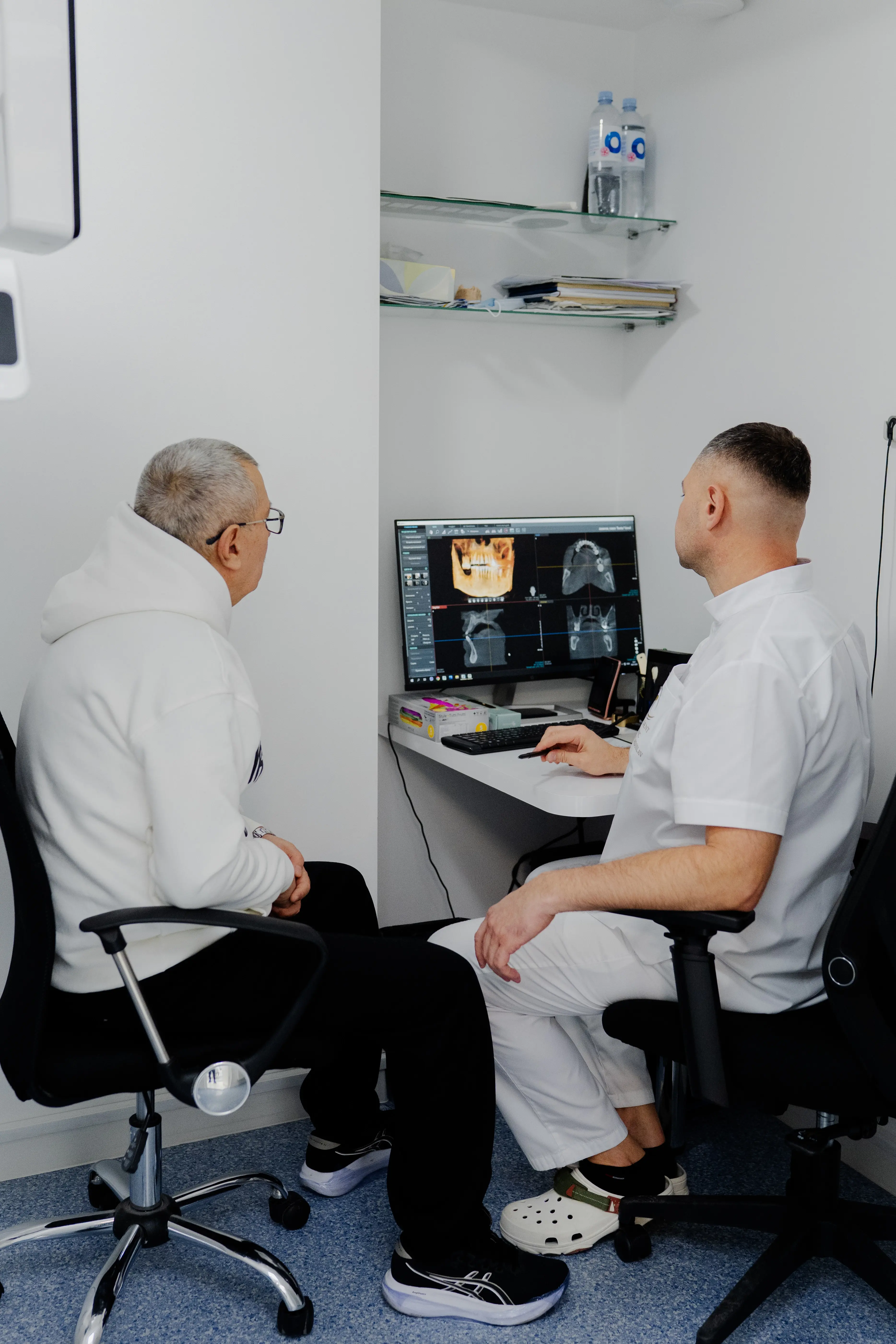
The doctor examines the gums, measures the depth of the periodontal pockets, and assesses tooth mobility and the condition of the bone on X-rays.
Then we explain which areas need treatment and what result you can expect after treatment.
Local anaesthesia is given so that the procedure is comfortable.
There is no pain: during the work you feel only touch or pressure.
Hard deposits, bacterial plaque and inflamed tissue are removed from the tooth roots, and access may be shallow or deeper depending on the situation. The tooth root is then smoothed so that bacteria do not build up again and the gums can stabilise.
The gum is returned to its place and, if needed, stitches are placed.
The doctor explains in detail how healing will go and what to do in the first days.
How long treatment and healing take
- The procedure takes 60 to 120 minutes, depending on its extent
- Initial healing takes a few days
- Full stabilisation of the gums takes a few weeks
The doctor gives the exact timing after the examination.
What happens if you do not have curettage
Frequently asked questions
Don't put off your dental health