Dental Veneers in Chișinău
Dental veneers are thin aesthetic shells that we use to correct the shape, shade and proportions of the front teeth.
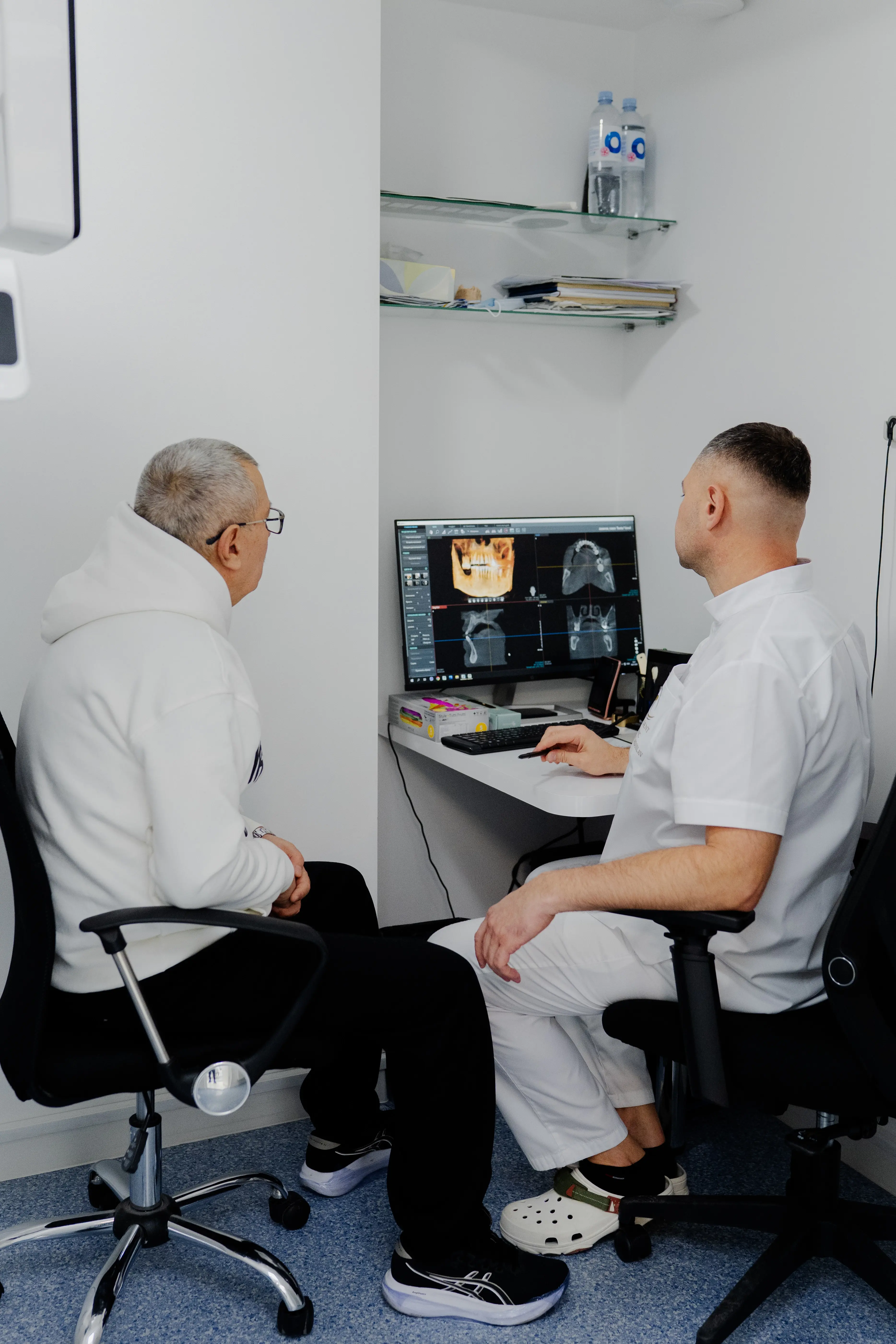
Before placing them, the doctor assesses your enamel and gums, your bite, the position of your teeth and the load they carry, to decide whether veneers suit your situation.
Depending on the goal, we suggest one of two types of ceramic veneers.
What are dental veneers
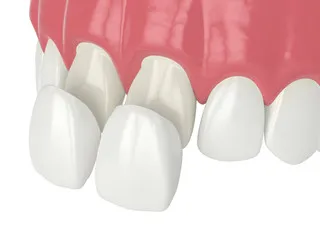
Dental veneers are thin ceramic shells that are bonded to the front surface of the teeth and change their appearance.
They let us:
- correct the shape of the teeth
- even out visible irregularities
- improve the colour without aggressive whitening
- make the smile more harmonious
Veneers do not change the function of the teeth and do not affect chewing.
When dental veneers are the right solution
The doctor looks at more than appearance. We also assess your bite, enamel and gums, so that the result is stable and comfortable in everyday life, not just visually attractive.
When dental veneers are not the best solution
We do not recommend dental veneers if:
- You have active decay or gum inflammation.
The teeth must be treated and the gums stabilised first, because veneers are not placed on unhealthy teeth. - Your bite needs orthodontic treatment.
If the teeth close incorrectly or are badly crowded, you first need braces or clear aligners, because veneers do not correct the bite. - You clench or grind your teeth heavily.
Under high load there is a risk of damaging the veneers, so the doctor may offer another solution or additional protection. - You expect a sharp, unnatural change to your smile.
For example, very large, too white or identical teeth. In these situations the doctor explains the limits of correct aesthetics and suggests alternatives.
In these cases we do not simply refuse. We offer a logical sequence of treatment: first resolve the functional or medical issues, and only then move on to aesthetics, if that is really appropriate.
Results of dental veneers
The shape, colour and proportions of the teeth look in harmony with your face.
Irregularities, chips, asymmetry and differences in height that show when you smile are removed.
Ceramic resists staining and keeps its look for years with normal hygiene.
Veneers do not interfere with speaking, eating or chewing, and feel like your own teeth.
When veneers are properly indicated, the intervention is kept minimal and the teeth stay alive.
Which veneers we fit
Press-ceramic veneers (E.max)
The most versatile and balanced option. E.max is a lithium disilicate pressed ceramic.
They suit you when you need to:
- change the shape of the teeth
- correct the colour
- make the smile neater without going to extremes
Press ceramic holds its shape well, looks natural and suits most standard aesthetic tasks. It is often the best choice if you want a beautiful but restrained result.
Ultra-thin ceramic veneers
The most delicate intervention.
We choose them when:
- the teeth are generally straight
- you are unhappy with the shade, small irregularities or proportions
- it is important to keep as much of your own enamel as possible
These dental veneers are very thin, look as natural as possible and are barely noticeable. They do not suit everyone, and the doctor explains straight away whether the condition of your teeth allows this format.
How we choose the type of veneers
We do not choose veneers by default or by price.
At the consultation we assess:
- the bite
- the condition of the enamel
- the load on the teeth
- the smile zone
- the expected result
Only after that do we offer the option that will be aesthetically correct and stable in everyday life.
Dental veneers prices
veneer
A practical option for most aesthetic tasks.
The most delicate correction with minimal intervention
The doctor determines the exact option and the number of veneers after the examination, taking into account your bite, the condition of your teeth and the result you want.
Stages of treatment with veneers
The doctor assesses the shape of your teeth, your bite, and the condition of the enamel and gums. We explain whether veneers suit you, how many you need and what a correct, natural result will look like. You will understand the limits of aesthetics and the overall logic of treatment from the start.
If necessary, the doctor prepares the teeth minimally for the veneers. The amount of preparation is always individual and limited to what is needed for secure fixing and a good appearance. If there is decay or gum problems, we deal with them first.
The exact shape of the teeth and the bite are recorded. From this data the laboratory makes veneers that match your proportions and look natural, not generic.
The doctor checks the shape, colour and comfort. If needed, corrections are made so that the veneers do not interfere with chewing and look harmonious in your smile.
Once you have approved the result, the veneers are bonded to the teeth. The procedure is painless. The doctor checks your bite and gives advice for getting used to them.
You may need a few days to get used to them, and this is normal. Once you have adapted, the veneers feel like your own teeth and need no special care.
How long veneer treatment takes
On average, placing dental veneers takes two visits, and sometimes a third.
- First visit: consultation, planning and preparation of the teeth
- Second visit: trial fit and bonding of the finished veneers
A few days pass between the visits while the laboratory makes the veneers.
The exact timing depends on:
- the number of veneers
- the condition of the teeth and gums
- whether additional preparation is needed
In simple cases you can get the result in 1 to 2 weeks. The doctor gives realistic timing at the consultation, and we do not promise a one-day result where it is not realistic.
Frequently asked questions about veneers
Don't put off your dental health