Ceramic Braces in Chișinău
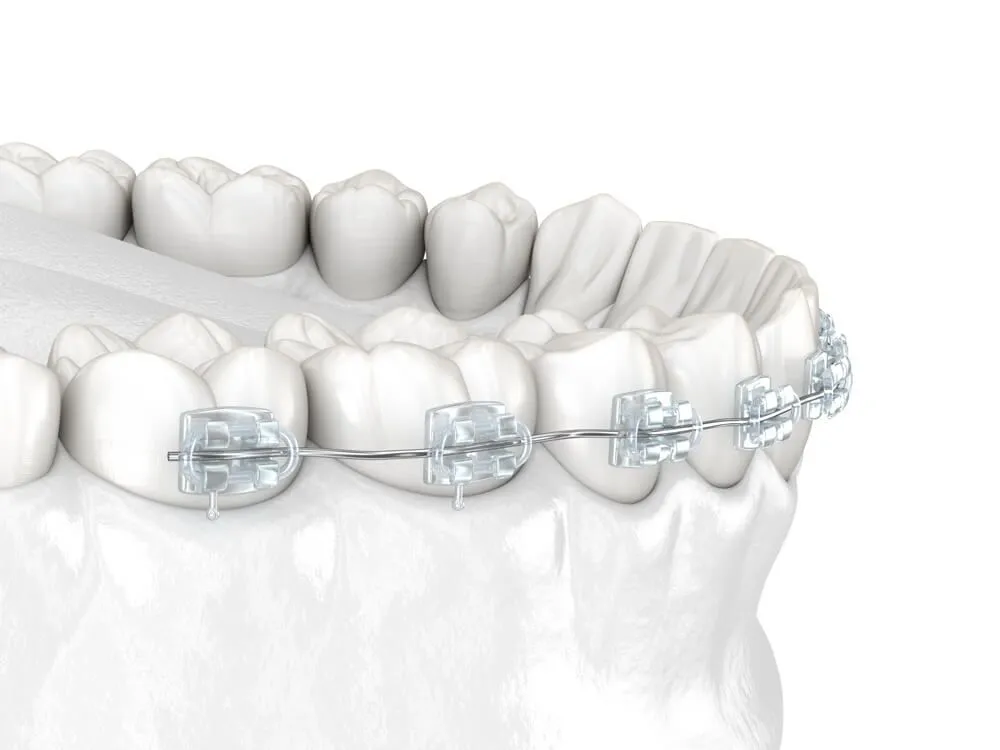
Ceramic braces are orthodontic treatment that corrects the position of your teeth and your bite with a less noticeable bracket system.
They work on the same principle as metal braces: an archwire gradually moves the teeth to the planned position. The ceramic brackets are matched closely to the shade of your enamel, so the system looks neater throughout treatment.
Our doctor assesses your bite and the position of your teeth and explains whether a ceramic system suits your clinical situation.
When Ceramic Braces Are a Good Fit
Comparing Orthodontic Systems
| What we compare | Metal braces | Ceramic braces | Sapphire braces | Clear aligners |
|---|---|---|---|---|
| Comfort | Average while you adapt | Higher | Higher | The highest |
| Visibility | Clearly visible | Less visible | Almost transparent | Almost invisible |
| Your part in treatment | Nothing extra to do | Nothing extra to do | Nothing extra to do | The trays are worn 20 to 22 hours a day, as your doctor advises |
| Price | The most affordable | Higher | Higher still | The highest |
Patients choose this option when looks and effectiveness both matter.
The doctor keeps treatment under close control, though the material limits how much correction is possible in complex cases.
How Visible Are Clear Ceramic Braces
Ceramic braces are not completely transparent, but their colour is matched closely to the shade of tooth enamel. This makes the system look less contrasting than metal braces.
They are also called clear ceramic braces.
How visible they are depends on the shade of the ceramic, the archwire and the natural colour of your enamel. If minimal visibility is your main priority, our doctor can also compare them with sapphire systems and clear aligners.
Results of Treatment with Ceramic Braces
These braces can fully align the teeth and correct the bite in most clinical situations.
The brackets are close to the colour of enamel, so they look neater than metal ones.
The doctor adjusts the system regularly and monitors tooth movement at every stage.
Patients feel more confident when speaking and smiling because the system looks more discreet.
Cost of Ceramic Braces
The doctor determines the exact configuration, timing and total cost after diagnostics and states them before treatment begins.
Stages of Treatment with Ceramic Braces
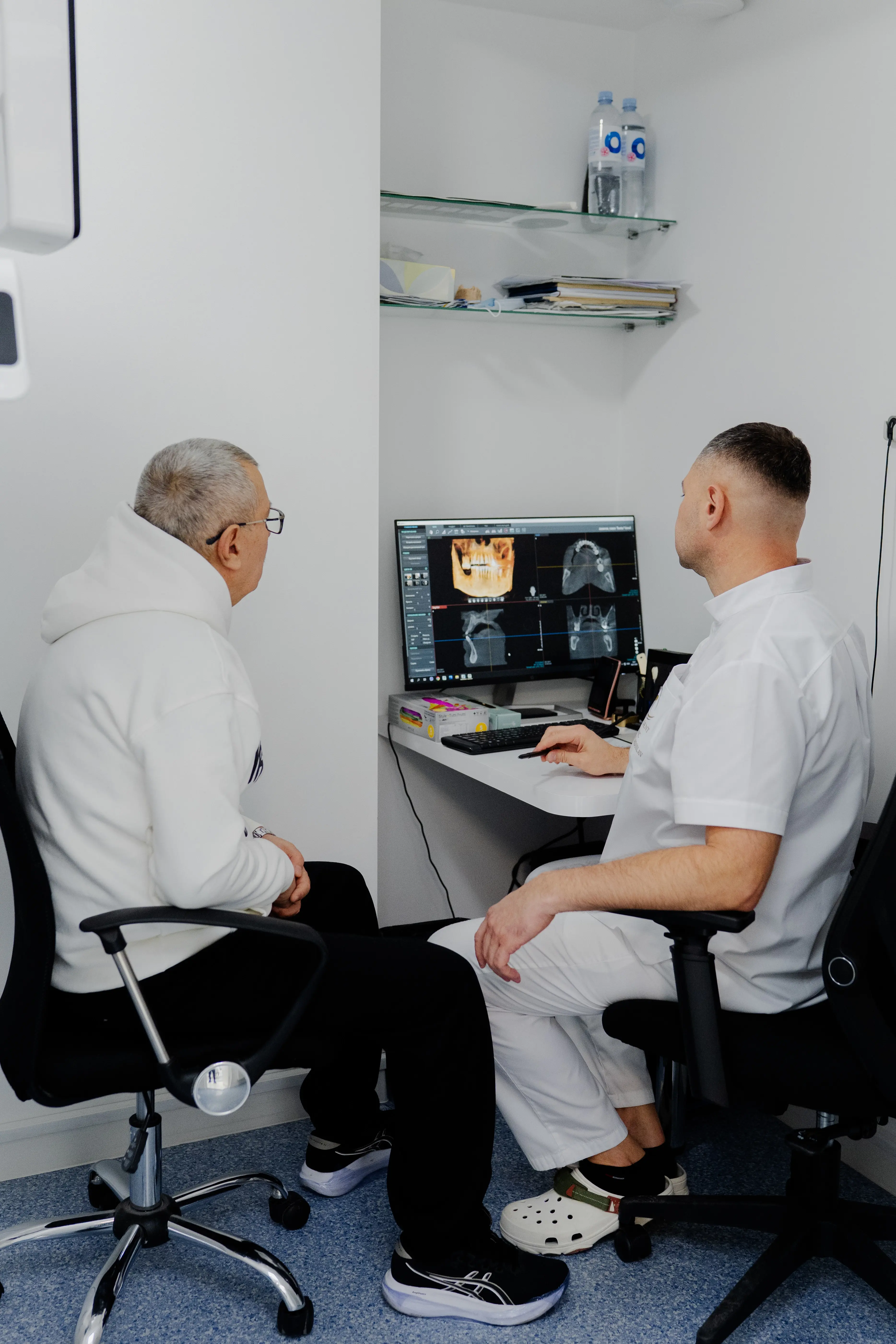
We assess your bite and tooth position, take X-rays and do digital diagnostics.
The doctor explains what exactly will be corrected, the approximate timing and which systems are suitable.
If you have caries or gum inflammation, it is treated first.
If everything is in order, we go straight to fitting the braces.
The brackets are fixed to the teeth and an archwire is chosen.
The procedure is painless and takes 1 to 1.5 hours on average.
The doctor explains which sensations are normal in the first days and how to adapt faster.
Scheduled visits to adjust the system and check tooth movement.
If necessary, the doctor corrects the treatment plan.
After the active stage, retainers are fitted to keep the teeth in their new position.
How Long Treatment Takes
On average, 12 to 24 months. The time depends on the complexity of the bite and the starting position of the teeth. The doctor gives approximate timing after diagnostics and can adjust it during treatment.
When Ceramic Braces Are Not the Best Option
In such cases we more often recommend metal braces.
Metal systems cost less.
Then ceramic gives no significant advantage.
Frequently Asked Questions About Braces
Don't put off your dental health